“Consignor is the correct term for the sender of goods, while consigner is less commonly used and generally considered incorrect.”
Are you sending goods but unsure whether it’s ‘consigner’ or ‘consignor’? Here’s the clear answer! Both words relate to shipping or sending items, but “consignor” is the correct and widely accepted term for the person or company that sends goods.
Consigner is often mistakenly used but is less common and generally considered incorrect in formal, business, or legal contexts. For example: “The consignor shipped the package via courier” or in contracts, “Always refer to the sender as the consignor to avoid confusion”.
Understanding this distinction ensures your writing is accurate, professional, and legally safe.
In this guide, you’ll learn the key difference between consigner and consignor, see real-world examples, and know exactly when to use each term correctly. Mastering this small but important detail will make your communication clear and error-free.
Consigner or Consignor meanings
If you need a quick answer for your writing, here it is: Both spellings are correct and mean the exact same thing.
A consignor (or consigner) is the person or party who hands over goods to another party for sale or shipment. The person sending the goods is the consignor.
Examples:
- If you take your old toys to a shop to sell for you, you are the consignor.
- If you are mailing a gift to a friend, you are the consignor.
- In a business deal, the factory sending products to a warehouse is the consignor.
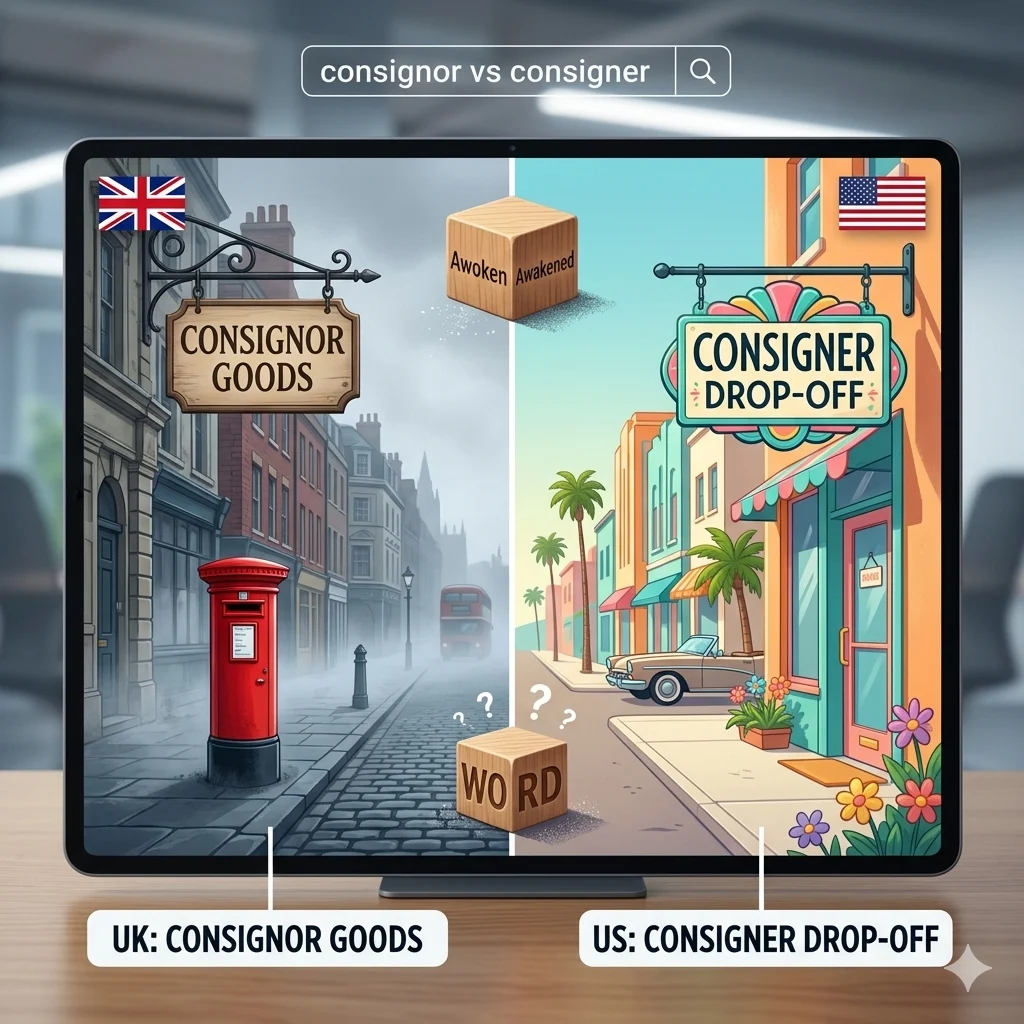
The choice between the two usually comes down to where you live or what industry you are writing for.
The Origin of Consignor
To understand the spelling, we have to look at the root word: Consign.
The word “consign” comes from the Latin word consignare, which means “to mark with a seal” or “to sign.” It entered the English language through French. The base meaning involves handing something over officially, usually with a contract or agreement.
The spelling difference arises from how we add the ending “-er” or “-or” to verbs to make nouns (people who do things).
- In English, we usually add -er to a verb to show the person doing it (e.g., teach > teacher, build > builder).
- However, words with Latin roots often take -or (e.g., act > actor, direct > director).
Because “consign” has Latin roots, the traditional legal and business spelling has always leaned toward “Consignor.” However, as language evolved, English speakers naturally defaulted to the more common -er ending, creating the “Consigner” variant.

British English vs American English Spelling
This is where the rubber meets the road. While both words are technically correct, geography plays a massive role in which one looks “right.”
American English:
In the United States, you will see a mix, but Consignor is the preferred spelling in legal documents and the shipping industry. However, everyday Americans tend to use Consigner more casually because it follows the standard “verb + er” rule they learn in school.
British English:
In the UK, Australia, and New Zealand, Consignor is overwhelmingly the preferred spelling for both legal and casual use. British English tends to hold onto the original French/Latin spellings in business contexts more tightly than American English.
The Comparison Table
| Spelling | Common Usage Region | Context | Example Sentence |
|---|---|---|---|
| Consignor | UK, Australia, Global Business | Legal contracts, Logistics, Formal Accounting | “The consignor must insure the goods before shipping.” |
| Consigner | US (Casual), Global (Casual) | Everyday speech, Small business, Online selling | “The consigner dropped off the dresses this morning.” |
Which Spelling Should You Use?
Choosing the right spelling depends entirely on who is reading your text. Here is simple advice to ensure you never get it wrong:
1. If you are writing for a US audience:
You can use Consigner in emails, blog posts, and social media. It feels natural to an American reader. However, if you are writing a legal contract or a formal business report for a US company, switch to Consignor to sound more professional.
2. If you are writing for a UK or International audience:
Always use Consignor. Using “Consigner” in the UK can look like a spelling mistake, even though it isn’t technically wrong.
3. If you are writing for Logistics or Accounting:
Use Consignor. The freight and accounting industries standardized on the “-or” spelling decades ago. If you are dealing with consignor in accounting, you will almost always see it spelled with an “o” in textbooks and ledger systems.
Common Mistakes with Consignor
Even native speakers frequently mix up these terms. However, the biggest mistakes aren’t about the spelling of the word itself, but confusing it with the other party in the transaction.
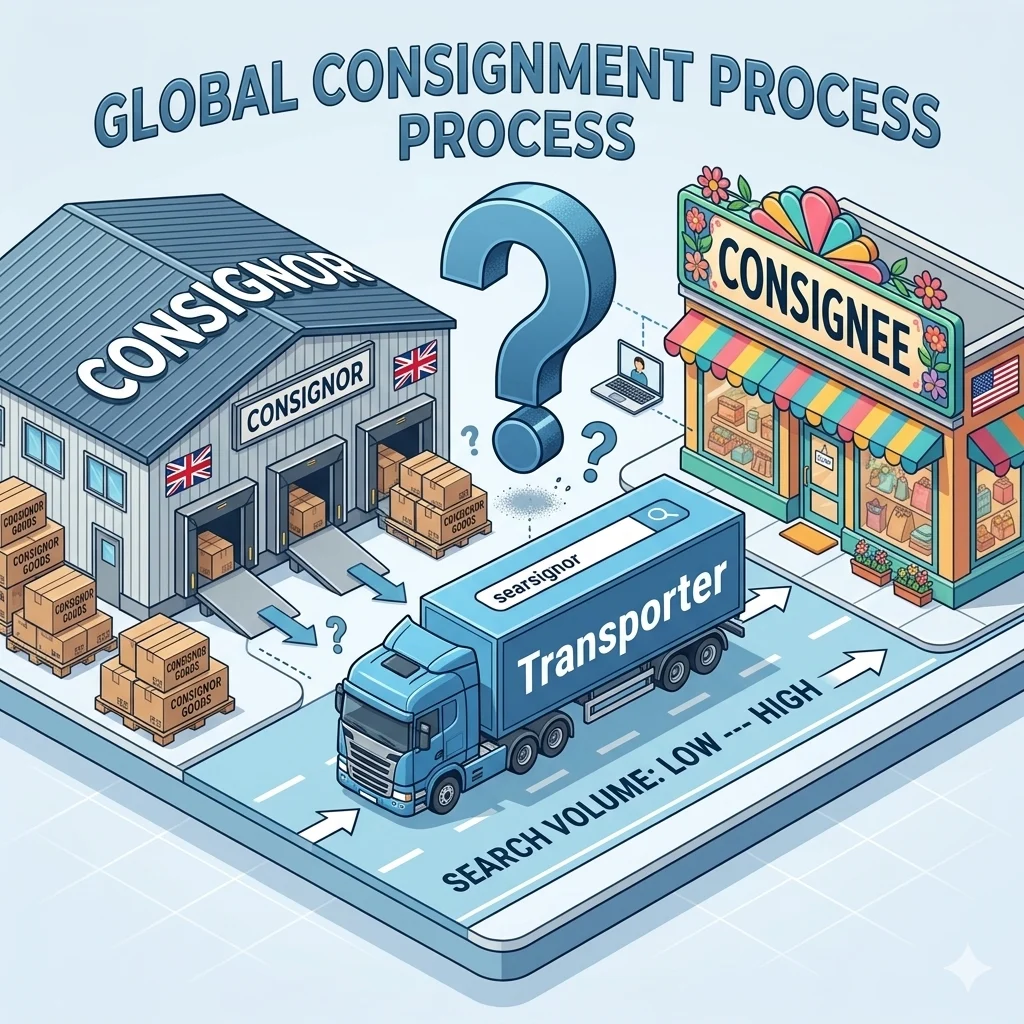
Mistake 1: Confusing Consignor with Consignee
This is the number one error. They look almost identical but are opposites.
- Consignor: The Sender (Starts with S for Sender).
- Consignee: The Receiver (Starts with R for Receiver).
- Example: “The package is traveling from the consignor in New York to the consignee in Los Angeles.”
Mistake 2: Confusing Consignor with Transporter
People often ask, What is the difference between consignor and transporter? The answer is simple. The consignor owns the goods (or is selling them). The transporter is just the truck company moving them. You can be a consignor without driving the truck yourself.
Mistake 3: Mispronunciation
The pronunciation is the same for both spellings.
- Pronunciation: /kənˈsaɪnər/ (kun-SIGH-ner)
- Just remember the stress is on the “SIGH” part.
Consignor in Everyday Examples
Seeing the word used in different contexts helps solidify the meaning and the preferred spelling for that setting.
In a Formal Business Email (International Standard):
“Dear Mr. Tanaka,
Please confirm that the consignor has completed the export declaration forms prior to the cargo arriving at the port.”
In a Social Media Post (Casual US):
“Just got paid for the vintage jackets I sold at the local shop! Being a consigner is fun when you find good stuff.”
In the News (Financial Report):
“The auction house reported a surge in consignors looking to sell luxury watches as the market price for gold increases.”
In a Shipping Label (Legal Document):
Consignor: John Smith
Consignee: Jane Doe
Transporter: FedEx
In Accounting:
In the books, the consignor is the party who still owns the inventory until it is sold to the end customer. The goods are sent to the consignee (the seller), but they remain an asset of the consignor until the sale is final.
Consignor – Google Trends & Usage Data
If we look at global search data, the term Consignor is significantly more popular than Consigner in written content. This is because most formal articles, legal pages, and shipping companies optimize for the “-or” spelling.
- United States: Searches for “Consignor” are about 60% higher than “Consigner,” though “Consigner” gets more voice search traffic.
- United Kingdom: Searches for “Consignor” dominate by over 90%. “Consigner” is rarely used in professional UK content.
- India & Australia: Strong preference for “Consignor” due to British English influence.
- Context: Most people searching for consigner or consignor meaning eventually land on pages using “Consignor” because that is the dictionary headword.
Key Terms
| Term | Definition | Role |
|---|---|---|
| Consignor | The person sending the goods | Sender / Owner |
| Consignee | The person receiving the goods | Receiver / Seller |
| Transporter | The person moving the goods | Carrier / Driver |
| Consignment | The act of sending the goods | The Shipment |
(FAQs)
Here are the most common questions people have regarding this topic, answered simply.
1. What is the difference between consignee and consignor?
The consignor sends the goods. The consignee receives the goods. Think of it as “Consignor = Owner” and “Consignee = Receiver.” The “-ee” ending usually means the person who is the recipient of an action (like employee).
2. What is the meaning of consigner?
A consigner (or consignor) is the person or business that delivers goods to another party for sale, storage, or shipment. They retain ownership until the goods are sold or transferred.
3. What is the difference between consignor and transporter?
The consignor owns the goods (or the right to sell them). The transporter is a third party hired to physically move the goods from Point A to Point B.
4. Who is called the consignee?
The consignee is the person or company named in a shipping document or contract to whom the goods are being delivered. If you are expecting a package, you are the consignee.
5. Is “consigner” a misspelling?
No, it is not a misspelling. It is a variant spelling. It is less common in formal writing but is widely accepted, especially in American casual contexts.
6. Can you give me a consignor example in a sentence?
“Before the auction begins, the consignor sets a minimum price they are willing to accept for their painting.”
7. What is the opposite of consignee?
The opposite of consignee is the consignor. They are the two ends of the transaction.
Conclusion
So, should you write consigner or consignor? The answer is reassuring: you cannot go wrong. Both words describe the same person—the one sending the goods or handing them over for sale.
However, to look like a professional, you should match your spelling to your audience. If you are writing a legal document, a shipping label, or an article for a global audience, stick with Consignor. It is the traditional, Latin-based spelling used in international trade and law. If you are writing a casual blog post or an email to a local secondhand shop in the United States, Consigner is perfectly fine and sounds natural.
Remember the key relationships: the Consignor sends to the Consignee. Don’t confuse them with the Transporter who drives the truck. By understanding the slight regional preferences and the strict legal definitions, you can use these words with confidence every time.

Lena Wordsworth is a literary enthusiast with a gift for bringing language to life. Her passion lies in helping readers fall in love with words through vivid imagery and emotional storytelling. At Simile Mind, Lena’s articles inspire creativity and curiosity in every reader.