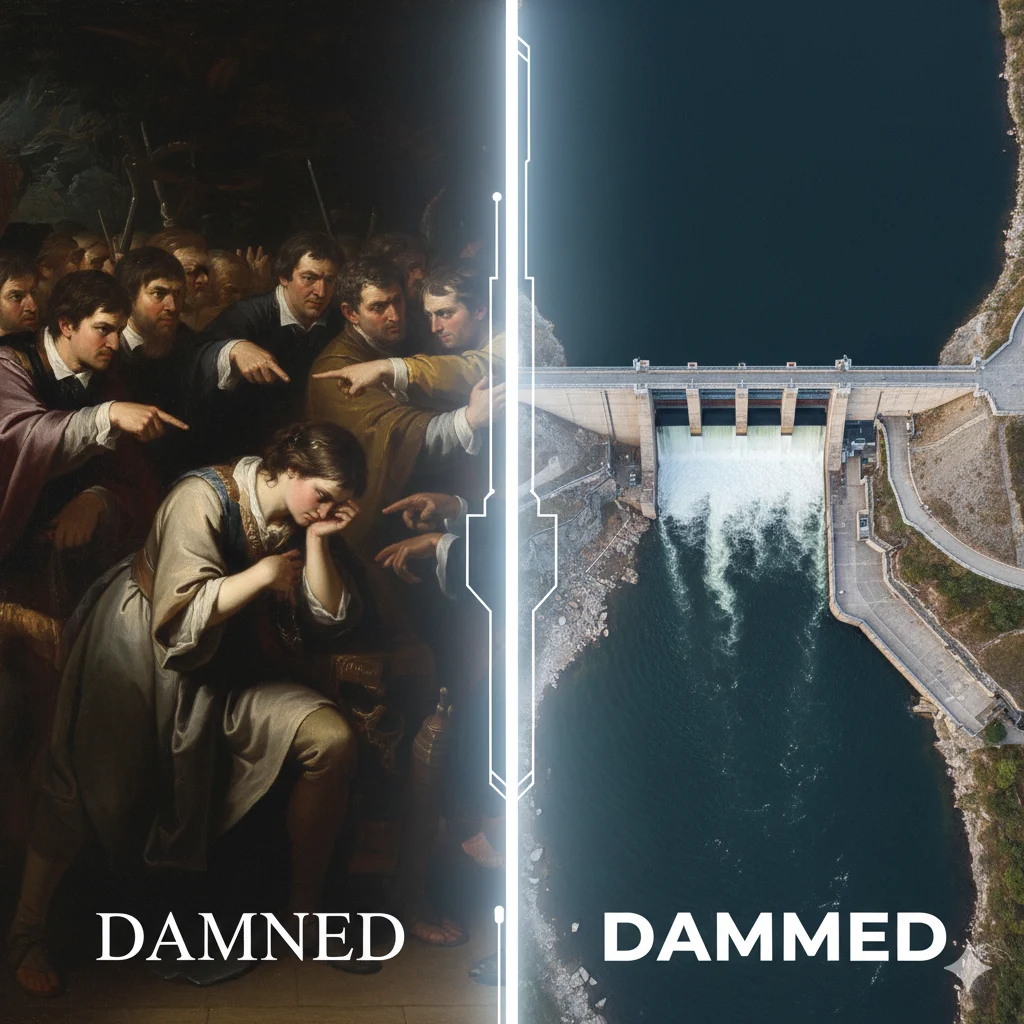
“Damned expresses a curse or strong disapproval, while dammed means blocked, usually referring to water or flow.”
Many English learners often confuse damned and dammed because they sound identical but have completely different meanings and uses. Damned is an adjective or exclamation used to express extreme disapproval, frustration, or a curse (e.g., “That’s a damned shame”), while dammed is the past tense of the verb “dam”, meaning to block or stop the flow of water (e.g., “The river was dammed to create a reservoir”). Using the wrong word can lead to confusion, awkward sentences, and even unprofessional writing.
In this article, you’ll discover:
- The exact meanings of damned and dammed
- Correct usage examples in sentences
- Common mistakes people make and how to avoid them
- Tips to remember which word to use every time
By the end, you’ll be able to confidently use damned vs dammed in writing, exams, or everyday communication, ensuring your English is precise, clear, and professional.
Damned or Dammed meanings
Damned and dammed are two different words. Damned is about condemnation or strong feeling. Dammed is about blocking water flow.
Damned (with an ‘n’) is an adjective or verb. It often means condemned to hell, cursed, or used for emphasis. Think of it as a strong, sometimes offensive, word for “very” or “doomed.”
- Example: “He was damned for his sins.” or “It’s a damned difficult problem.”
Dammed (with two ‘m’s) is the past tense of the verb ‘to dam.’ It means to build a barrier to hold back water.
- Example: “They dammed the river to create a lake.”
Simple trick: If it’s about water or blocking, use two ‘m’s like in dam. If it’s about curses, hell, or emphasis, use the ‘n’ in damned.
The Origin of Damned and Dammed
The confusion starts with their roots. These words come from entirely different places in history.
Damned finds its origin in the Latin word “damnare,” which means “to condemn, to inflict loss upon.” It passed into Old French as “damner” and then into Middle English. Its core meaning has always been about judgment and punishment, often of a spiritual or final nature. The word carries heavy weight, used in religious contexts for eternal punishment and in everyday speech for strong disapproval.
Dammed comes from the Middle Dutch or Middle Low German word “dam.” This meant a barrier or a fence used to control water. The verb “to dam” simply means to build such a barrier. The spelling with two ‘m’s comes from the root word “dam.” We double the ‘m’ when adding ‘-ed’ to keep the short ‘a’ sound (like in ‘cram’ -> ‘crammed’).
The spelling difference exists because they are different words. The shared ‘d-a-m’ start is a coincidence of English, a language that borrows from many others. This is why understanding their separate histories is key to using them right.

British English vs American English Spelling
Here is good news: for damned and dammed, there is no major British vs American English spelling war. The rules are the same on both sides of the Atlantic. The difference is in the root verb “to dam.”
Both follow the standard rule for forming the past tense: when a one-syllable verb ends with a consonant-vowel-consonant pattern (CVC), we double the final consonant before adding ‘-ed’.
- Dam = D (consonant) + A (vowel) + M (consonant).
- Therefore: dam + -ed = dammed.
This rule applies uniformly in all English dialects for this word. The spelling dammed with two ‘m’s is correct everywhere. The word damned is also spelled consistently globally.
Comparison Table: Damned vs. Dammed
| Feature | Damned | Dammed |
|---|---|---|
| Part of Speech | Adjective, Verb (past participle) | Verb (past tense of ‘to dam’) |
| Core Meaning | Condemned, cursed, doomed; used for emphasis. | Blocked or confined by a dam. |
| Root Origin | Latin “damnare” (to condemn) | Middle Dutch/German “dam” (barrier) |
| Example (Concept) | “I’ll be damned!” (expression of surprise) | “The stream was dammed.” (physical action) |
| Example (Sentence) | She felt damned by the criticism. | Engineers dammed the valley for hydro power. |
| Key Signal | Religion, curse, strong feeling, emphasis. | Water, rivers, engineering, obstruction. |
Orthopedics or Orthopaedics Secrets Every Patient Must Know 🦴
Which Spelling Should You Use?
Choosing the right word depends on your audience and your message.
For a US or UK/Commonwealth Audience: The spelling rules are identical. Your choice is not about geography but meaning. An American engineer writes “dammed the river,” just as a British one does. A Canadian and an Australian both say “damned if I know.”
For Global/International English (Business, Academia): Clarity is king. Use the word that precisely matches your intent.
- Use dammed in technical reports, environmental studies, or construction documents related to water management.
- Use damned carefully. In formal global writing, it can be seen as harsh or profane. Instead of “damned difficult,” consider “extremely difficult.” Know your corporate or institutional culture.
Quick Decision Guide:
- Are you talking about a river, lake, or blocking flow? -> Use Dammed.
- Are you expressing a curse, condemnation, or strong emphasis? -> Use Damned.
- When in doubt, read your sentence aloud. “They damned the river” implies they cursed the river. “They dammed the river” means they built a barrier across it. The correct choice will sound right.
Common Mistakes with Damned or Dammed
The most frequent error is using one word in place of the other. This changes your sentence meaning completely.
Mistake 1: Using “dammed” when you mean “damned.”
- Incorrect: “I was so dammed tired after work.” (This says you were “blocked by a dam” tired).
- Correction: “I was so damned tired after work.”
Mistake 2: Using “damned” when you mean “dammed.”
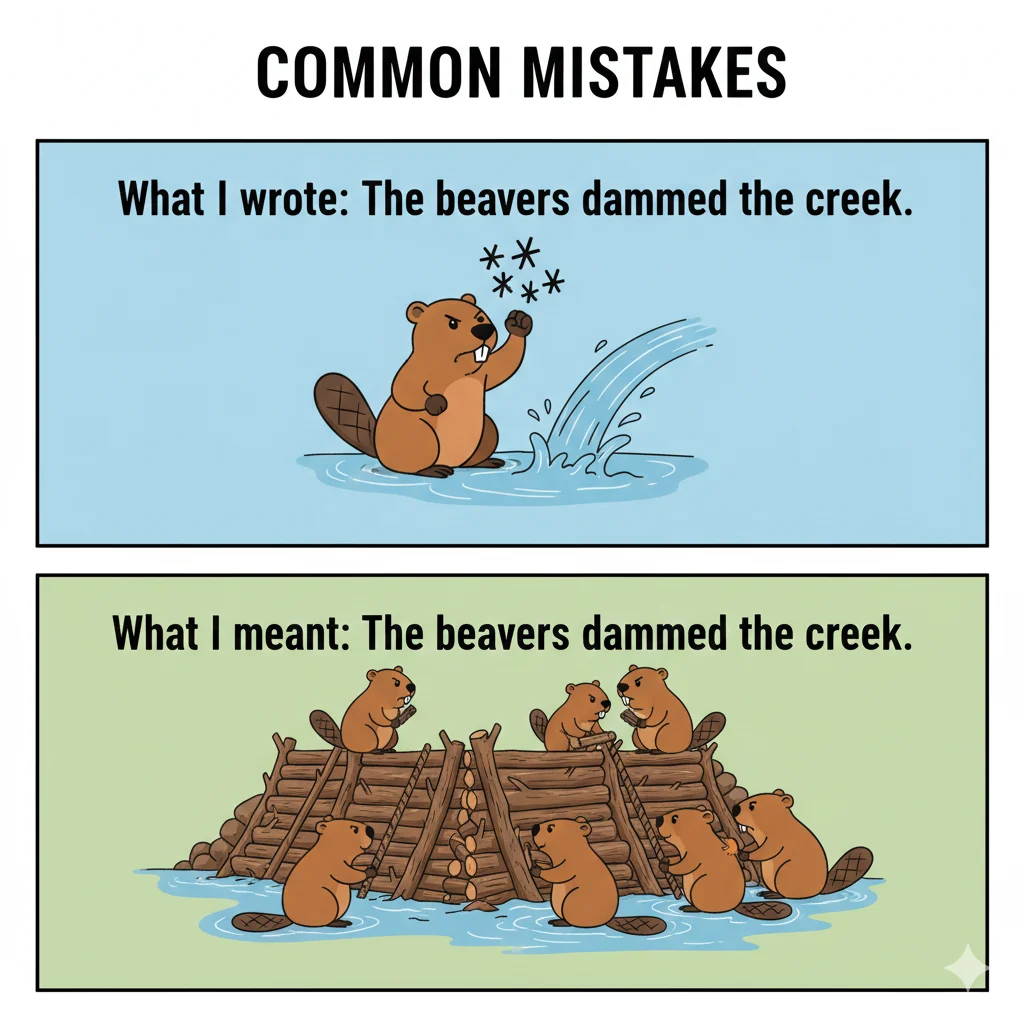
- Incorrect: “The beavers damned the creek.” (This says the beavers cursed or condemned the creek).
- Correction: “The beavers dammed the creek.”
Mistake 3: Misspelling “dammed” as “damned” due to pronunciation. In speech, the ‘n’ in “damned” can be subtle, leading to the wrong written choice. Remember the ‘n’ is for condemnation.
How to Avoid These Errors:
- Link “damned” to “condemn.” Both end with “mn.”
- Link “dammed” to “dam.” You build a dam, so you have dammed the water.
Damned and Dammed in Everyday Examples
Seeing words in context cements understanding. Let’s look at real-world usage.
In Emails:
- Informal: “This damned software crashed again before I saved the report.” (Emphasis)
- Formal/Technical: “The preliminary survey for the dammed reservoir is complete.” (Physical action)
In News Headlines:
- Figurative: “Politician Damned by Leaked Emails” (Condemned by public opinion).
- Literal: “Controversial River Dammed for New Irrigation Project” (Physical structure built).
On Social Media:
- “Just saw the final score. I’ll be damned!” (Expression of shock/surprise).
- “Check out this photo of a creek dammed by beavers! #NatureEngineers” (Physical blockage).
In Formal Writing (Reports, Academia):
- Avoid using “damned” as an intensifier; it’s too informal. Use “profoundly,” “extremely,” or “utterly.”
- Use “dammed” precisely in geology, geography, or engineering contexts: “The glacial valley was dammed by moraine deposits.”
Damned or Dammed – Google Trends & Usage Data
Looking at search data reveals public confusion and interest. Searches for “damned meaning” are consistently higher and more global than for “dammed meaning.” This shows “damned” is the more commonly sought word, likely due to its use in idioms, movies, and music (“Damned if you do, damned if you don’t”).
Searches for “dammed meaning” often spike in regions with news about water projects, droughts, or environmental issues involving rivers. For example, searches might rise in the western US during discussions about dams or in South Asia during monsoon-related news.
The phrase “I’ll be damned” is a consistently high-volume search, pointing to its status as a frozen idiom people want to understand. This data tells us users are often looking to understand the figurative, expressive use of “damned” more than the technical term “dammed.” However, when they need “dammed,” the need is specific and often related to real-world events.
(FAQs)
1. What does it mean to be damned?
To be damned traditionally means to be condemned by God to eternal punishment in hell. In modern use, it often means being doomed to a terrible fate or facing severe criticism.
2. What does “damned if you do, damned if you don’t” mean?
This common idiom describes a no-win situation. It means that every possible action will lead to a bad outcome or criticism. You will be condemned for acting and condemned for not acting.
3. How do you use “dammed” in a sentence?
Use “dammed” to describe the action of blocking water. Example: “The old pond was created when a small spring was dammed up over a century ago.”
4. Is “I’ll be damned” offensive?
It can be, depending on the audience. It originates from religious condemnation (“I will be sent to hell”). While often used lightly to express surprise, avoid it in formal or religiously conservative settings.
5. What is a synonym for damned?
Synonyms include cursed, doomed, condemned, execrated, or (for emphasis) extremely, utterly, incredibly.
6. What is a synonym for dammed?
Synonyms include blocked, obstructed, barricaded, choked, or confined (specifically in relation to water flow).
7. Is “dammed” only used for water?
Primarily, yes. While you can metaphorically say “dammed up emotions,” meaning suppressed, the core meaning is physical blockage of water. The metaphor works because it directly references the water concept.
Conclusion
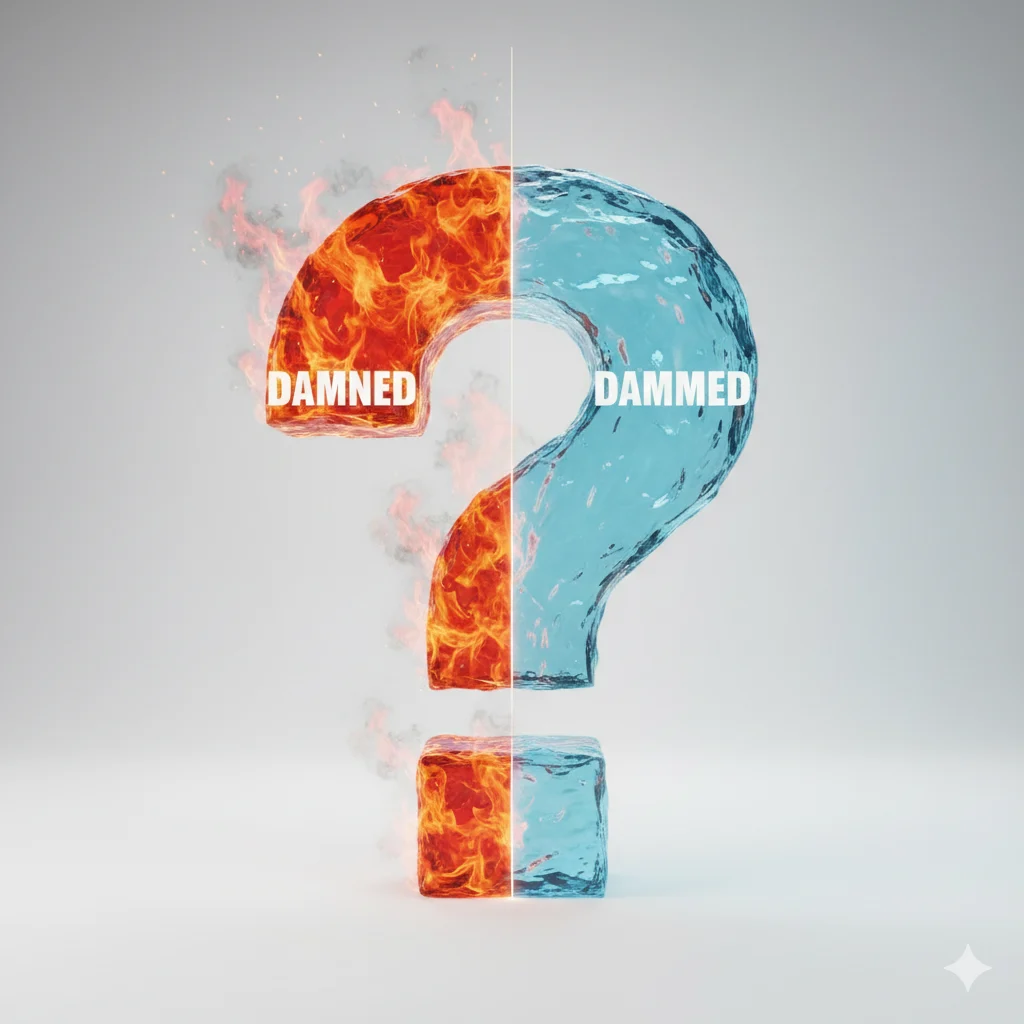
The choice between damned or dammed is a classic example of how one letter changes meaning. The key is to connect the word to its core concept. Damned (with an ‘n’ for condemnation) deals with judgment, curses, and strong feeling. Dammed (with two ‘m’s like the structure) deals with the physical blocking of water. We have seen their different origins, identical spelling rules across English dialects, and their use in everything from casual tweets to formal reports.
Remember the simple test: if you can replace it with “cursed” or “condemned,” use damned. If you are talking about a river, lake, or barrier, use dammed. For professional writing, use damned cautiously due to its potential informality and strength. Use dammed with precision in technical contexts.
By mastering this small distinction, you make your writing more accurate and professional. You ensure your readers grasp your true intent, whether you’re discussing a damned difficult puzzle or a dammed mountain stream. Let this guide be the final dam against the flood of confusion on this topic.

Lena Wordsworth is a literary enthusiast with a gift for bringing language to life. Her passion lies in helping readers fall in love with words through vivid imagery and emotional storytelling. At Simile Mind, Lena’s articles inspire creativity and curiosity in every reader.