“Meek is the correct spelling meaning gentle or quiet, while ‘meak’ is a misspelling and not a valid English word.”
Confused between “meak” and “meek”? The correct word is “meek”—“meak” is simply a misspelling. Meek means gentle, quiet, or not assertive, and it is the only correct spelling used in English.
In contrast, meak is not a real word and should be avoided in writing. For example, you can say, “She has a meek personality,” “He gave a meek response,” or “The child looked meek and shy.” In short, meek is correct, and meak is incorrect.
Understanding the difference between meak vs meek helps you avoid spelling mistakes and write clearly in school, exams, or professional content. If you want to use the right word confidently and improve your English, knowing meak vs meek is essential.
Meak or Meek meanings
The correct spelling is meek. “Meak” is a common misspelling and is not recognized as a standard English word.
If you are asking what is the meaning of meak?, the answer is simple: it is an error. There is no valid definition for “meak” in modern English dictionaries. When people type “meak,” they almost always mean “meek.”
Meek is an adjective that describes a person who is quiet, gentle, and submissive. However, it is important to understand the true depth of the word. To be meek is not to be weak. Instead, it describes strength that is controlled and patient.
For example:
- Correct: She was a meek leader who listened before she spoke.
- Incorrect: He was a meak follower.
If you are searching for meak or meek meaning, remember that only “meek” carries meaning. The other is simply a typo.
The Origin of Meek
To understand why the spelling is “meek” and not “meak,” we have to look at the history of the word. The word comes from Old Norse mjúkr, which meant “soft” or “pliant.” It traveled into Middle English as meke. Over hundreds of years, the spelling standardized to “meek.”
This history explains why the spelling feels unusual. The double “e” reflects its Scandinavian roots. Because the pronunciation is long and soft, writers often mistakenly substitute “ea” (as in “weak” or “peak”), but the traditional spelling has remained “meek” for centuries.
This word also has a powerful history in philosophy and religion. When we look at the meek definition Bible, we see a major shift in understanding. In the Bible, particularly in the Beatitudes (Matthew 5:5), it says, “Blessed are the meek, for they shall inherit the earth.” Here, “meek” does not mean timid. It refers to those who have power but choose to wield it with humility and self-control.

British English vs American English Spelling
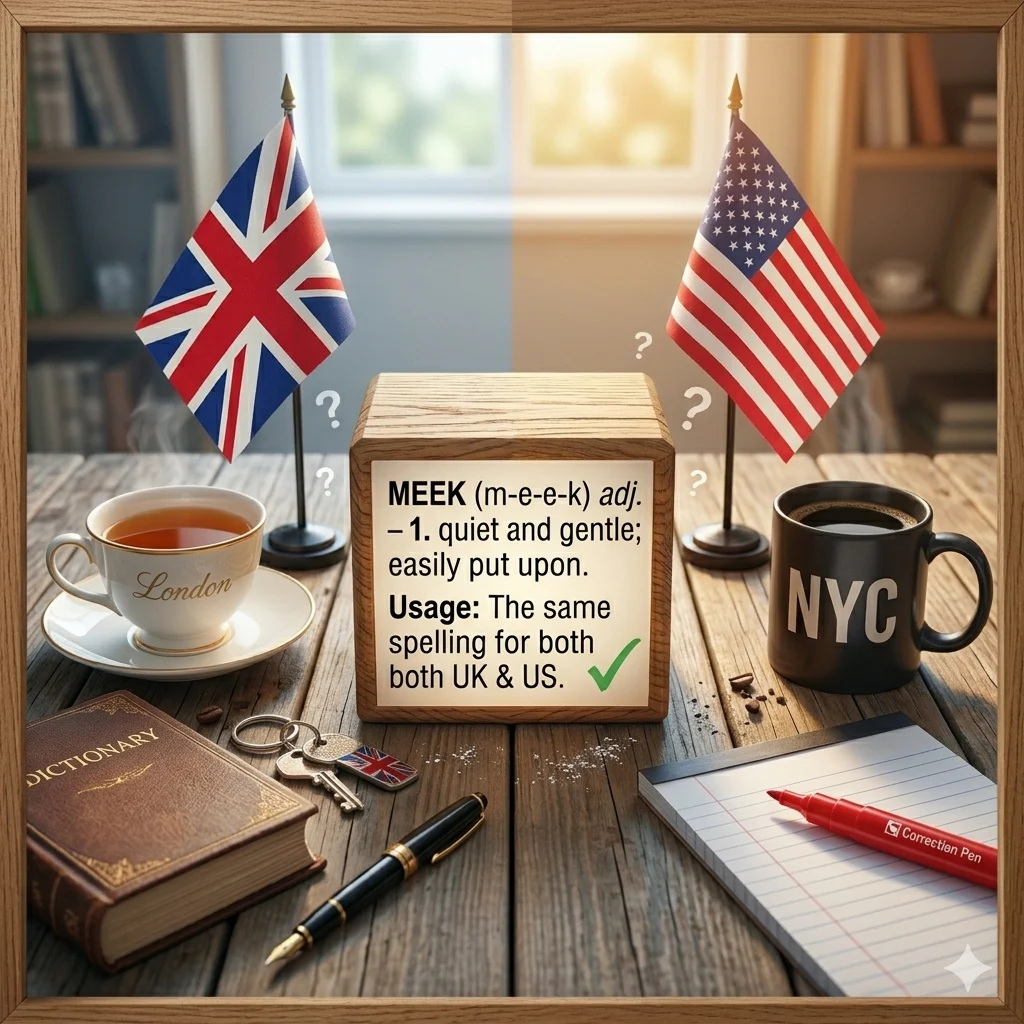
One reason people search for “meak or meek” is the assumption that perhaps one spelling is British and one is American. However, in this case, there is no variation.
| Variation | Spelling | Status |
|---|---|---|
| Correct Spelling | Meek | Standard in all English dialects |
| Common Misspelling | Meak | Incorrect in US and UK English |
Unlike words like “color” (US) and “colour” (UK), the word “meek” remains consistent. Whether you are in London, New York, Sydney, or Toronto, the spelling is always meek.
Examples in context:
- British English: The pupil was meek in the presence of the headmaster.
- American English: The employee was meek during the negotiation.
In both examples, the spelling and meaning are identical. So, if you are wondering about meak or meek in english, the answer is that “meek” is the only English variant accepted globally.
Which Spelling Should You Use?
Since “meak” is not a real word, the choice is simple. You should always use meek. However, your audience can influence how you use the word.
- For US Audiences: Use “meek” confidently. It is understood as a standard adjective, though it is often associated with shyness in casual conversation.
- For UK/Commonwealth Audiences: “Meek” is also standard. In these regions, the phrase meek and mild meaning is often used in literature to describe a gentle, non-confrontational character.
- For Global/Non-Native Speakers: Stick to “meek.” Be careful not to confuse it with “meak.” Remember that is meak a real word? The answer is no. Using “meak” will mark your writing as containing a spelling error.
If you are writing for a professional or academic audience, using “meek” correctly shows attention to detail. If you are writing creatively, you might use “meek” to describe a character’s quiet demeanor.
Common Mistakes with Meak or Meek
Spelling errors are common, but they can undermine your credibility. Here are the most frequent mistakes and how to avoid them.
Mistake 1: Using “Meak” as a Noun
- Incorrect: He was a meak.
- Correct: He was a meek person.
Mistake 2: Confusing “Meek” with “Weak”
Many writers assume meek synonyms are purely negative, like “weak” or “submissive.” While these can be synonyms in some contexts, true meekness implies restraint, not inability.
- Incorrect: He was too meak (meek) to lift the box. (This confuses physical strength with personality).
- Correct: He was too meek to argue with his boss.
Mistake 3: Misspelling in Common Phrases
The phrase meek and mild meaning is often misspelled as “meak and mild.” Always use the double “e.”
Mistake 4: Searching for the Opposite
When users look for what is the opposite of meak?, they usually mean the opposite of meek. The opposites of meek are: arrogant, proud, assertive, or domineering.
Meek in Everyday Examples
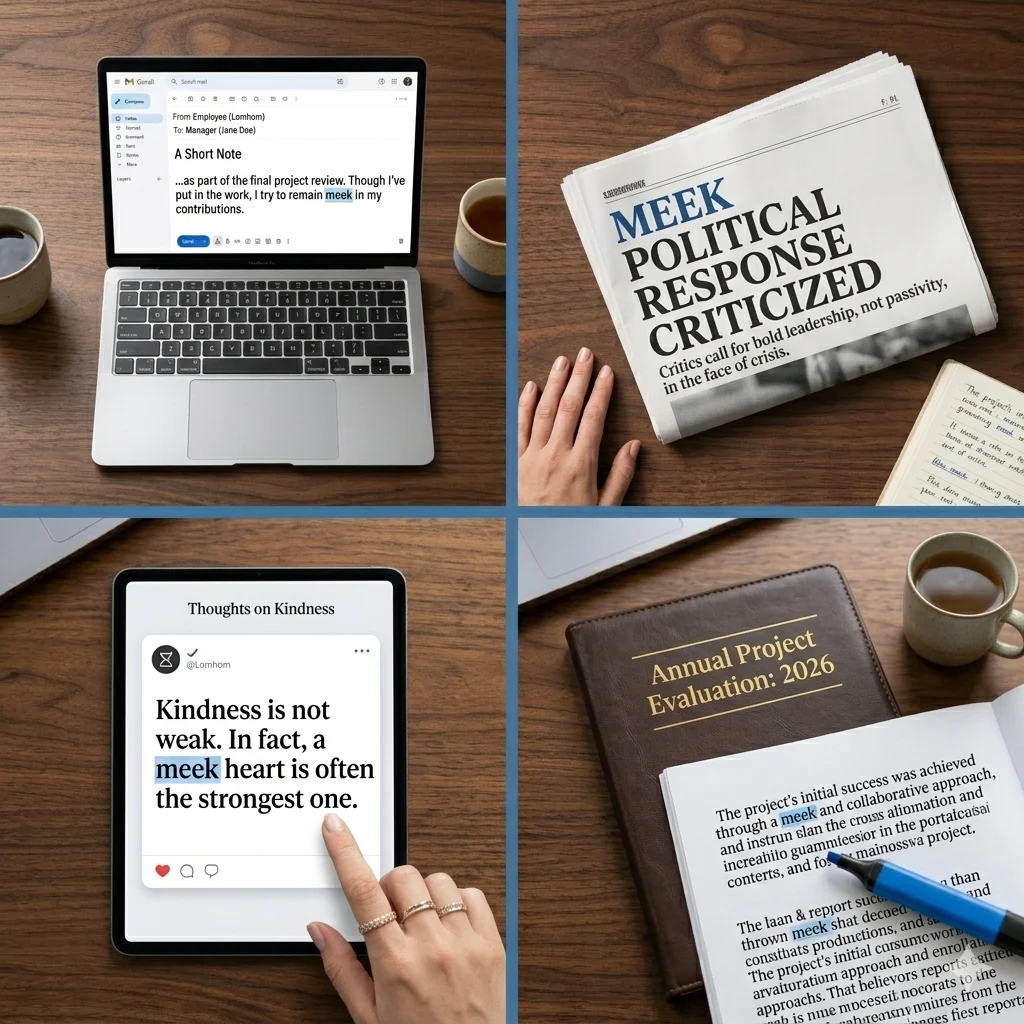
Understanding how to use “meek” in real life helps solidify the spelling. Here is how the word appears in different types of writing.
In Emails:
- “I don’t mean to sound meek, but I would prefer to discuss this in a private setting.”
- Usage: Here, it shows politeness without demanding attention.
In News Headlines:
- “The meek response from the government surprised critics.”
- Usage: News often uses “meek” to describe a reaction that is softer than expected.
On Social Media:
- “Don’t mistake my kindness for being meek. I know my worth.”
- Usage: This is a popular modern use, reclaiming the word as a form of controlled strength.
In Formal Writing:
- “The study concluded that meek employees are often overlooked for promotions, despite their high competence.”
- Usage: Formal writing uses “meek” to describe behavioral patterns.
Meek – Google Trends & Usage Data
Analyzing search data reveals why so many people ask “meak or meek.” The misspelling “meak” appears consistently in search queries, indicating a widespread phonetic confusion.
Key Data Points:
- Top Regions: Interest in the term “meek” is highest in the United States, followed by the United Kingdom and Canada. However, the misspelling “meak” is proportionally higher in non-native English speaking countries where phonics rules vary.
- Context: Spikes in searches for meek definition Bible occur around Easter and religious holidays, showing that the spiritual meaning of the word remains highly relevant.
- Related Searches: Common related queries include meek synonyms, meek opposite, and what does it mean to be meek. This shows that users are not just checking spelling; they are trying to understand the concept.
People want to know if “meak” is a valid variant. The data confirms it is not. Search engines autocorrect “meak” to “meek” 99% of the time.
Comparison Table: Meek Variations
To clarify the differences and similarities, here is a table comparing the correct term with common errors and related terms.
| Term | Type | Meaning/Status |
|---|---|---|
| Meek | Correct Adjective | Gentle, humble, quietly strong. |
| Meak | Misspelling | No meaning; error. |
| Weak | Correct Adjective | Lacking physical strength or character. |
| Mild | Correct Adjective | Gentle in nature or temperature. |
| Humble | Correct Adjective | Having a low view of one’s importance. |
Understanding the meak or meek distinction is crucial here. While “weak” and “meek” sound similar, they are different. What is the opposite of meak? is a flawed question because “meak” isn’t real. However, what is the opposite of meek? is arrogant.
FAQs
1. What is the meaning of meak?
“Meak” has no meaning in the English language. It is a common spelling error for the word “meek.” If you see this word, it is likely a typo.
2. What does it mean to be meek?
To be meek means to be humble, patient, and gentle. It does not mean weak. A meek person often has power or strong opinions but chooses to express them with restraint and kindness.
3. Is meak a real word?
No, “meak” is not a real word. It is not found in standard dictionaries like Oxford or Merriam-Webster. The correct word is “meek.”
4. What is the opposite of meak?
Since “meak” is not a word, it has no opposite. However, if you are asking about the opposite of meek, the opposites include: arrogant, proud, aggressive, and domineering.
5. What is the meek definition Bible?
In the Bible, particularly in Matthew 5:5, “meek” refers to those who are humble before God and patient under suffering. It is seen as a virtue of strength under control, not weakness.
6. What are the best meek synonyms?
Good synonyms for meek include: humble, gentle, modest, patient, mild, and submissive. However, depending on the context, “submissive” can have a more negative tone than “gentle.”
7. What does meek and mild meaning refer to?
“Meek and mild” is a common phrase used to describe someone who is very gentle, quiet, and unlikely to complain or fight back. It often describes a docile personality.
Conclusion
Navigating the confusion between “meak or meek” ultimately leads to a clear conclusion: meek is the only correct spelling. While “meak” appears frequently due to phonetic spelling errors, it has no place in formal or informal English writing. Understanding the true definition of “meek” is equally important. Far from being a sign of weakness, being meek is often a sign of emotional intelligence and controlled strength, a concept deeply rooted in history and the meek definition Bible.
Whether you are writing a professional email, a social media post, or a religious reflection, using the correct spelling and context demonstrates mastery of the language. Remember the meek synonyms like gentle and humble, and avoid the common trap of confusing it with “weak.” The next time you need to describe someone who is quietly confident, you can do so with the assurance that you are using the word correctly. Choose “meek,” and use it to highlight the powerful balance between strength and humility.

Ava Quillstone is a passionate wordsmith who turns everyday language into art. With a deep love for creative writing and poetic expression, Ava explores the magic of metaphors, similes, and the hidden emotions behind words. When she’s not writing for SimileMind, she’s sipping tea by a window and dreaming up new literary worlds.