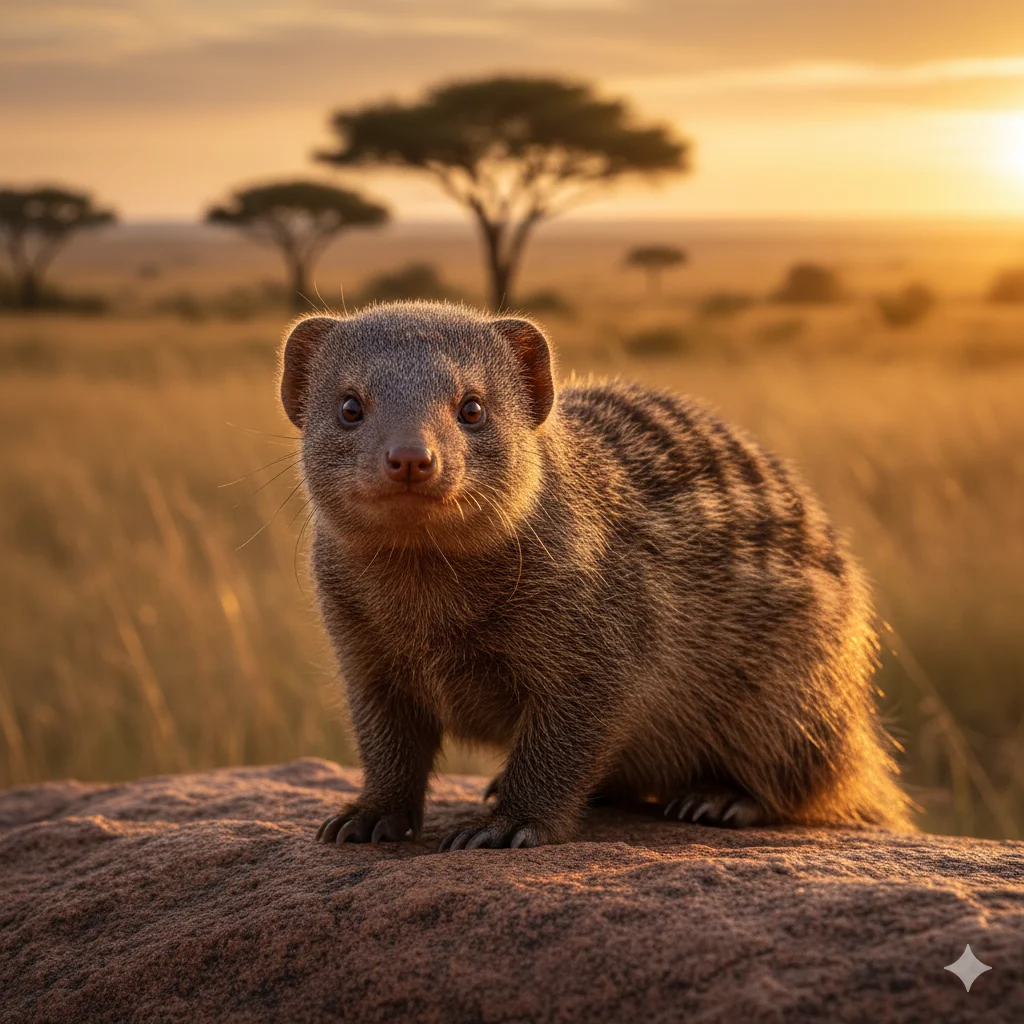
“‘Mongooses’ is the correct plural of ‘mongoose.’ ‘Mongeese’ is incorrect. Despite sounding like ‘goose → geese,’ the word comes from an Indian language and follows the regular plural rule by adding -es.”
Think mongeese is correct? Think again! The word “mongoose” does not derive from goose, so it doesn’t follow the goose → geese pattern. The correct plural is simply mongooses, adding -es like a regular English noun.
Examples:
✔ Several mongooses were spotted near the river.
❌ Several mongeese were spotted near the river.
Whether you’re writing essays, articles, or social media posts, knowing this rule keeps your writing clear, professional, and grammatically correct.
Extra Tips:
- Always use “mongooses” in formal and informal writing.
- Avoid “mongeese”, even if it sounds logical.
- Works for American, British, and global English, no regional differences.
Mongooses or Mongeese meanings
Let’s cut to the chase. The correct plural of mongoose is mongooses.
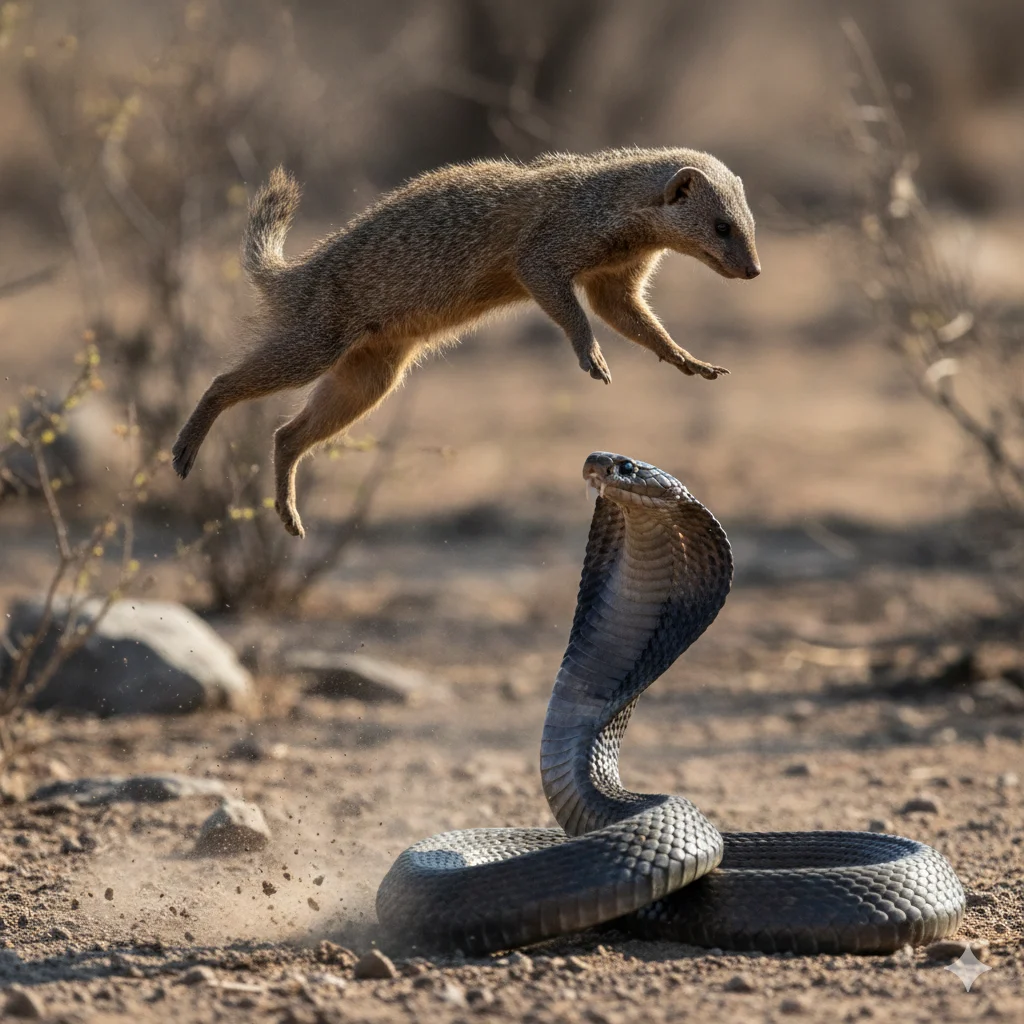
While “mongeese” is widely guessed because it follows the pattern of “goose” becoming “geese,” it is considered a non-standard pluralization. When referring to the small carnivorous mammal known for its ability to kill venomous snakes, you should always use mongooses in formal and informal writing.
- Example (Correct): The zoo has a new exhibit featuring three banded mongooses.
- Example (Incorrect): A group of mongeese crossed the path.
To understand why is it not mongeese, we have to look beyond simple animal names and into the roots of the word itself.
The Origin of Mongooses or Mongeese
The confusion surrounding mongooses or mongeese is a perfect example of how English borrows words and then struggles to fit them into its own rules. The word “mongoose” doesn’t come from Old English or Germanic roots like “goose” does. Instead, it has a fascinating origin story that explains its tricky plural.
The Marathi Connection
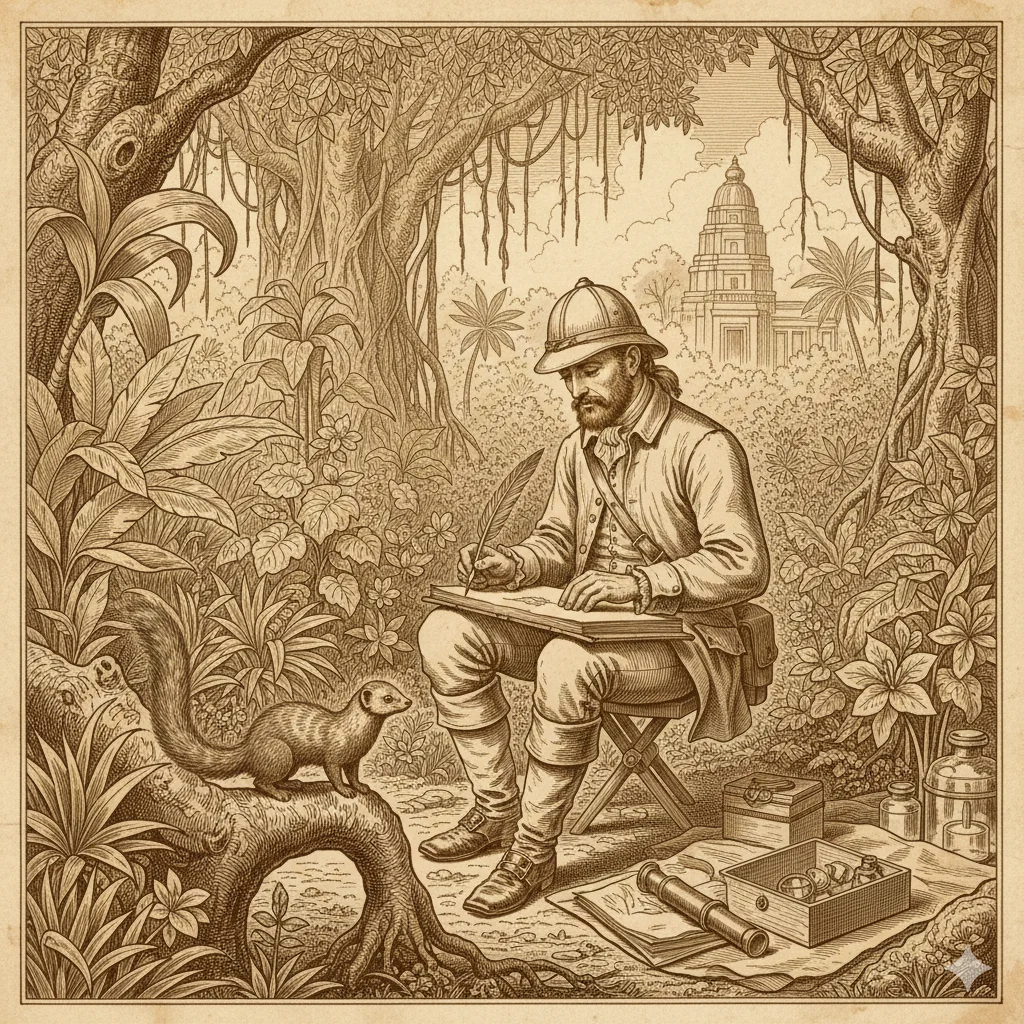
The word “mongoose” entered the English language during the British colonial period in India. It was adapted from the Marathi word “मुंगूस” (pronounced mungūs). The Dravidian languages also have similar words, such as the Telugu word “ముంగిస” (mungisa) and the Kannada word “ಮುಂಗುಸಿ” (mungusi).
When the British encountered this animal, they adopted the local name. Because it ended in an “s” sound, it was easily absorbed into English as “mongoose.” However, because it was a borrowed word, it didn’t carry the internal vowel-changing rules (called “umlaut”) that affect native Germanic words.
Why “Goose” Becomes “Geese”
To understand is it mongooses or mongeese, we have to look at “goose.” “Goose” is a very old English word (Germanic in origin). Its plural, “geese,” is a form of “mutated plural” where the vowel sound changes (foot/feet, tooth/teeth). This is an ancient pattern.
When English speakers first encountered the word “mongoose,” their brains tried to apply this familiar pattern. It sounded logical: if one goose becomes many geese, then one mongoose should become many mongeese. But logic and English spelling rarely go hand-in-hand. Because “mongoose” is a borrowed noun, it typically follows the standard rule of simply adding an “s” to make it plural, just like “gazebo” becomes “gazebos” and “hippopotamus” becomes “hippopotamuses.”
British English vs American English Spelling
When discussing mongooses or mongeese, it’s important to note that this isn’t really a transatlantic battle. Both American and British English agree on this one: “mongooses” is the standard plural. However, there are subtle differences in how the word might be used in context.
In British English, you might be more likely to encounter the word in classical nature writing or historical texts about colonial India. In American English, the word pops up most frequently in the context of zoology, animated films (like Rikki-Tikki-Tavi), or news reports about invasive species in Hawaii or the Caribbean.
Here is a comparison table to clarify the usage:
| Feature | Mongooses (Standard) | Mongeese (Non-Standard) |
|---|---|---|
| Spelling Rule | Standard English pluralization (Add -s) | False analogy with goose/geese |
| Linguistic Origin | Borrowed from Marathi (मुंगूस) | English invention |
| Grammar Status | Grammatically correct | Grammatically incorrect / Jocular |
| Dictionary Listing | Listed as the primary plural in Oxford and Merriam-Webster | Sometimes listed as a variant but marked as rare or incorrect |
| Usage Context | Scientific writing, news, formal documents | Informal jokes, common mistakes in speech |
| Example | “The banded mongooses foraged for food.” | “I saw a family of mongeese.” (Incorrect) |
As the table shows, if you are checking the mongoose plural Oxford Dictionary entry, you will find “mongooses” listed first. Some dictionaries might acknowledge that “mongeese” is used occasionally, but they will always steer you toward the correct form.
Nill or Nil The Secret Difference Schools Never Taught You 📚
Which Spelling Should You Use?
Deciding between mongooses or mongeese is not about geography, but about audience and context. Here is a simple guide to ensure you never make a mistake.
- Academic & Scientific Writing: You must use mongooses. If you are writing a biology paper or a school essay, “mongeese” will be marked as a spelling error. Precision is key in scientific contexts.
- General Audiences (US, UK, Global): Stick with mongooses. While many people might think “mongeese” is correct, using it will make you look less credible. Your global audience expects standard English.
- Creative Writing & Dialogue: This is the only grey area. If you are writing a character who is uneducated or trying to be funny, you could have them say “mongeese.” It highlights their attempt to sound smart by applying a rule incorrectly. For example: “Look at all them mongeese!” he said, puffing out his chest.
- Social Media & Informal Blogs: Use mongooses. It might feel awkward to say, but it is correct. If you are worried about the sound, rephrase the sentence. Instead of “Look at those mongooses,” try “Look at that group of mongooses.”
The safe answer is always mongooses. This follows the standard rule for loanwords and is accepted everywhere.
Common Mistakes with Mongooses or Mongeese
Even native speakers frequently stumble over the plural of mongoose. Here are the most common errors and how to fix them.
Mistake 1: Using “Mongeese” in Formal Writing
- Error: The documentary highlighted the social structure of mongeese in the Kalahari.
- Correction: The documentary highlighted the social structure of mongooses in the Kalahari.
Mistake 2: The “Meese” Confusion
A related question people ask is, is meese grammatically correct? The answer is a definitive no. “Meese” is not the plural of “moose.” “Moose” follows the same rule as “mongoose”—it comes from Native American languages (Algonquian), so its plural is simply “moose” (like deer) or “mooses” (though rarely used). There is no “meese,” just as there is no “mongeese” in proper English.
Mistake 3: Forgetting the Context of Fear
Many people search for why do snakes fear mongooses? This is a common query related to the animal’s behavior, not the grammar. However, in articles discussing this, writers sometimes make the grammar mistake. Remember, it’s the lightning-fast reflexes and immunity to venom that make mongooses such effective snake hunters.
Mistake 4: Misidentifying the Group
When asking what is a group of mongoose called, the answer isn’t directly related to the plural, but it’s good to know. A group of mongooses can be called a “mongaggle,” a “troop,” or simply a “group.” While “mongaggle” is a charming, coined term, “troop” is more widely accepted in zoological contexts.
Mongooses or Mongeese in Everyday Examples
Seeing the word in action helps solidify the correct usage. Here is how “mongooses” fits into various types of writing.
- In a News Report:
“Agricultural officials in Hawaii are concerned about the rising population of feral mongooses. These predators are threatening native bird populations.” - In an Email:
“Hi Sarah, I’ve attached the photos from our trip to the wildlife reserve. We got some great shots of the mongooses hunting near the riverbank.” - On Social Media (Instagram Caption):
“Watching these playful mongooses wrestle was the highlight of the safari! 🦡 #Wildlife #Mongooses #Africa” - In a Formal Essay:
“The Herpestidae family, commonly known as mongooses, exhibits remarkable cooperative breeding behaviors, where subordinate females assist in rearing the offspring of the dominant pair.” - In a Children’s Book (Dialogue):
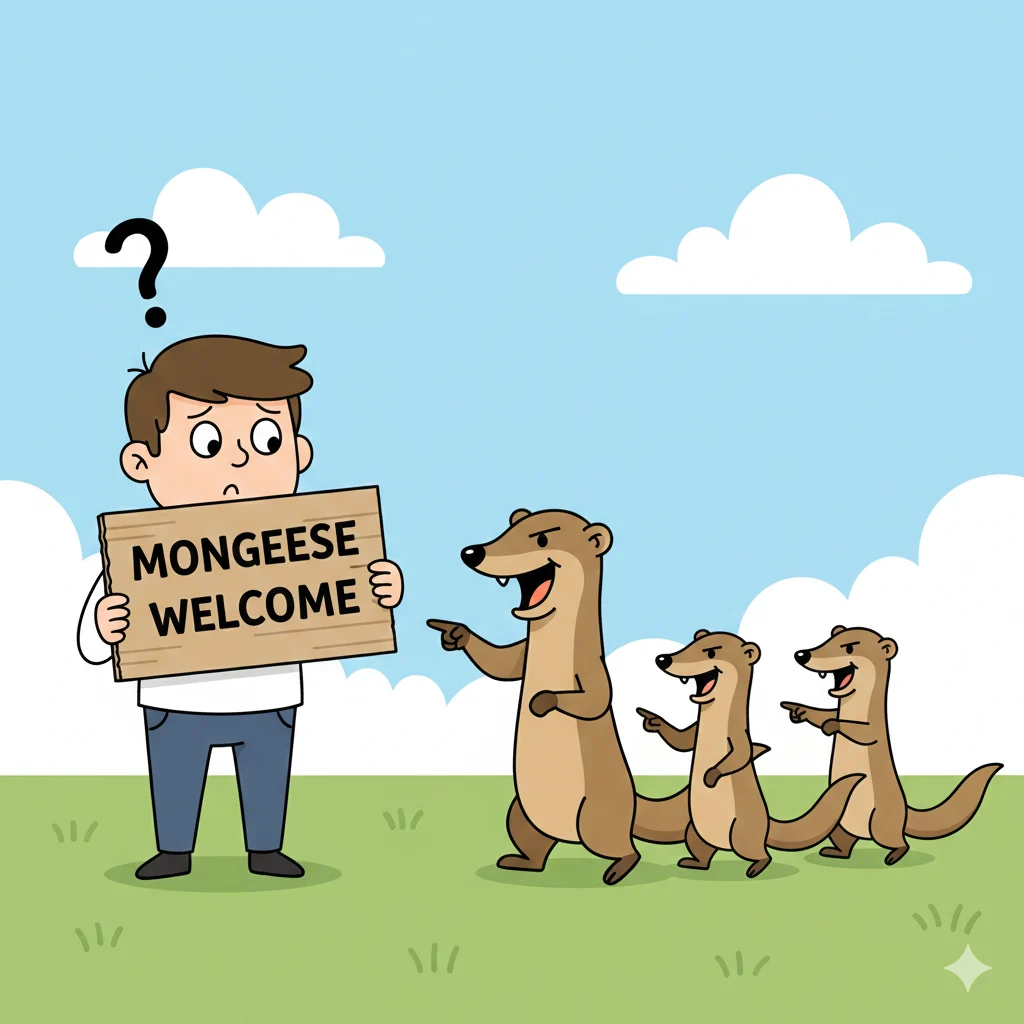
“Are those mongeese?” asked Timmy.
“No, dear,” his mother corrected gently. “They are mongooses. Remember, that’s a special word.”
As you can see, even in informal speech, the corrected form (“mongooses”) is used to teach the proper term.
Mongooses or Mongeese – Google Trends & Usage Data
If you look at the data, the battle of mongooses or mongeese is really no battle at all. Search engine data shows that people are desperate to know which one is correct, hence the high volume of “plural of mongoose” queries.
Globally, “mongooses” dominates in written content, news articles, and scientific publications. “Mongeese” appears almost exclusively in forums and question-and-answer sites where people are asking for clarification (like this article!).
- United States: “Mongooses” is the standard in educational material and news reports about introduced species in Florida.
- United Kingdom: “Mongooses” is used in natural history programming (like BBC Earth) and conservation efforts. The British fascination with the animal, thanks to Rudyard Kipling’s The Jungle Book, keeps the word in common parlance.
- India: As the animal’s namesake homeland, English-language media in India correctly uses “mongooses” when reporting on urban wildlife sightings.
The data confirms that while the search intent is to solve the mongooses or mongeese meaning, the output is almost always the former.
FAQs: Mongooses or Mongeese
Here are the most frequently asked questions regarding the plural of this tricky word.
1. Why is it not mongeese?
It is not “mongeese” because the word “mongoose” comes from the Marathi language mungūs, not from Old English. English speakers often try to apply the “goose/geese” rule to it, but borrowed words usually take the standard “-s” plural.
2. Do you say mongooses or mongeese?
You should say mongooses. While “mongeese” is a common mistake, it is not grammatically correct in standard English.
3. Is meese grammatically correct?
No, “meese” is never grammatically correct. The plural of moose is “moose” (following the pattern of deer) or occasionally “mooses,” but never “meese.”
4. What is the plural of mongoose in the Oxford Dictionary?
According to the mongoose plural Oxford Dictionary listing, the standard plural is “mongooses.” The dictionary may note “mongeese” as a humorous or mistaken form, but it is not recommended for use.
5. What is a group of mongoose called?
A group of mongooses is commonly called a “troop,” “committee,” or “mongaggle.” “Troop” is the term most often used in scientific literature.
6. Why do snakes fear mongooses?
Snakes fear mongooses not just because of their speed, but because they have evolved acetylcholine receptors that make them resistant to snake venom. This allows them to survive bites that would be fatal to other animals.
7. Is there a mongoose plural joke?
Yes, it’s a classic grammar joke. Question: What is the plural of mongoose? Answer: Mongeese. Question: What is the plural of moose? Answer: Meese. Question: What is the plural of goose? Answer: Geese. English is weird.
Conclusion
Navigating the tricky waters of mongooses or mongeese doesn’t have to be a headache. We’ve established that the correct term is mongooses, a standard plural for a fascinating animal with roots in the Marathi language. While your brain might instinctively reach for “mongeese” due to the similarity to “goose,” remember that English is a language of exceptions, and loanwords play by their own rules. We explored the origin of the word, confirmed its status in both British and American English, and saw how it functions in real-world examples.
Whether you are writing a scientific paper, a school assignment, or just captioning a photo of a troop of mongooses, you can now do so with confidence. The next time someone asks you is it mongooses or mongeese, you’ll have the historical and grammatical knowledge to explain why the correct answer is the one that sounds a little less like a flock of birds. So go ahead and use “mongooses”—it’s the accurate, professional, and globally understood choice.

Noah Syntax is a linguistics lover who finds beauty in structure and rhythm. His writing combines precision with playfulness, decoding the secrets of language for everyday readers. At Simile Mind, Noah brings clarity, humor, and insight to every metaphor he explores.