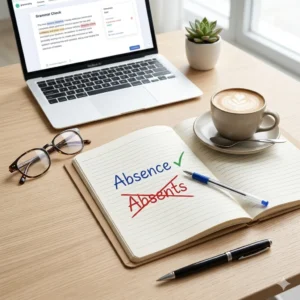
“‘Offered’ is correct; ‘offerred’ is a common misspelling. Learn the correct usage with examples and tips.”
Ever typed “offerred” and wondered if it’s right? You’re not alone! Many writers and English learners struggle with this common spelling mistake. The correct form is “offered”, with a single r, and it is the past tense and past participle of “offer”. The spelling “offerred” with a double r is incorrect in standard English.
Understanding this difference is crucial to write clearly, avoid grammar mistakes, and maintain professionalism in emails, essays, and creative or formal writing.
In this article, you’ll find easy-to-follow rules, example sentences, and practical tips to always use “offered” correctly, so you never second-guess your spelling again. Whether you’re a student, teacher, or professional writer, this guide ensures your writing stays flawless and confident.
Offered or Offerred meanings
The correct spelling is offered with one ‘r’.
Offered is the past tense of the verb “to offer.” It means presented something for acceptance or rejection, expressed willingness to do something, or made something available.
Examples of correct usage:
- She offered me a cup of tea.
- The company offered him the job yesterday.
- They have offered free shipping for the entire month.
- He offered to help with the heavy boxes.
Offerred (with double ‘r’) is always incorrect in standard English. No dictionary recognizes this spelling. If you write “offerred,” grammar checkers will flag it, and readers may notice the mistake.
The confusion happens because of words like “preferred” (from prefer) and “referred” (from refer), where the consonant doubles. But “offer” follows a different rule, which we’ll explain in the next section.
The Origin of Offered
To understand why “offered” has one ‘r’, we need to look at where the word comes from.
The word “offer” entered English in the 15th century from Old French offrir, which came from Latin offerre—a combination of ob (toward) and ferre (to bring or carry). The meaning has always stayed close to its roots: bringing something forward for someone to take or reject.
The spelling rule that governs “offered” is about syllable stress. In English, when you add -ed to make a past tense verb, you double the final consonant only if:
- The verb ends in consonant-vowel-consonant
- AND the stress is on the final syllable
“Offer” (of-fer) has two syllables, but the stress is on the first syllable (OF-fer), not the last. Because the stress isn’t on the final syllable, we don’t double the ‘r’ when adding -ed.
Compare this to “prefer” (pre-FER). Here the stress is on the last syllable, so we double the ‘r’ to make “preferred.” The same rule gives us “referred” from “refer” and “transferred” from “transfer.”
This consistent rule explains why “offered” stays single and “offerred” is always wrong. English spelling looks complicated, but patterns like this make it logical once you know what to look for.

British English vs American English Spelling
Good news: offered is spelled the same way in both British and American English. There’s no difference to remember!
Some words change between these two versions of English—like “color” (US) vs “colour” (UK) or “realize” (US) vs “realise” (UK). But “offered” isn’t one of them. Both sides of the Atlantic agree on one ‘r’.
Here’s how other similar words compare:
| Word | American English | British English | Rule Applied |
|---|---|---|---|
| Offer (past) | offered | offered | One ‘r’ (stress on first syllable) |
| Prefer (past) | preferred | preferred | Double ‘r’ (stress on last syllable) |
| Refer (past) | referred | referred | Double ‘r’ (stress on last syllable) |
| Travel (past) | traveled | travelled | Varies (US one ‘l’, UK double ‘l’) |
| Cancel (past) | canceled | cancelled | Varies (US one ‘l’, UK double ‘l’) |
The table shows that while some words have different spellings in the US and UK, “offered” stays consistent. This makes your life easier—you never have to adjust this word for different audiences.
Examples in both varieties:
- US: The store offered a 20% discount for new customers.
- UK: The shop offered a 20% discount for new customers.
Only the vocabulary changes; the spelling of “offered” remains identical.

Which Spelling Should You Use?
Always use offered. There’s no situation where “offerred” is correct.
For US audiences: Use offered. Americans expect standard spelling, and “offerred” will look like a typo.
For UK and Commonwealth audiences: Use offered. British, Australian, Canadian, and other English speakers all use the single ‘r’ spelling.
For global or non-native English audiences: Use offered. When writing for an international audience, correct spelling builds trust and shows professionalism.
The only exception? If you’re quoting an old text that uses historical spelling (unlikely), or if “offerred” appears in a brand name or creative work (extremely rare). In normal writing—emails, essays, articles, social media, business documents—offered is the only acceptable form.
Common Mistakes with Offered
Even good writers sometimes double the ‘r’ in “offered.” Here are the most frequent errors and how to avoid them.
Mistake 1: Writing “offerred”
- ❌ Incorrect: She offerred to pay for dinner.
- ✅ Correct: She offered to pay for dinner.
- Why it happens: Confusion with words like “preferred.”
Mistake 2: Doubling the ‘r’ in other forms
- ❌ Incorrect: He is offerring his services.
- ✅ Correct: He is offering his services.
- Why it happens: The same stress rule applies to -ing forms. “Offering” has one ‘r’.
Mistake 3: Adding extra letters in past tense
- ❌ Incorrect: They have offerred a solution.
- ✅ Correct: They have offered a solution.
- Why it happens: Overthinking the spelling rule.
Mistake 4: Confusing “offered” with similar words
- ❌ Incorrect: The company offerred me a position.
- ✅ Correct: The company offered me a position.
- Why it happens: “Offer” looks like it might follow the “prefer” pattern.
Quick memory trick: Think of “offer” as having the stress on the first syllable. Say it out loud: OF-fer. The first part is strong, the second part is weak. Weak syllables don’t get double letters when we add endings. If you can remember “OF-fer” → “offered” (one ‘r’), you’ll never make this mistake.
Offered in Everyday Examples
Seeing “offered” in real contexts helps cement the correct spelling. Here’s how the word appears in different types of writing.
In Professional Emails:
Dear Mr. Chen,
Thank you for your application. We are pleased to inform you that you have been offered an interview for Wednesday at 2 PM.
Best regards,
Sarah Jenkins
In News Headlines:
- “Company Offered Millions in Settlement Talks”
- “Local Restaurant Offered Free Meals to Healthcare Workers”
- “Government Offered Aid to Flood Victims”
On Social Media:
Just finished a great interview! They offered me the job on the spot. So excited! 🎉 #newjob #career
In Formal Writing:
The study offered compelling evidence that early intervention improves outcomes. Researchers offered several recommendations based on their findings.
In Casual Conversation (written):
My neighbor offered to water my plants while I’m on vacation. So kind!
In Legal or Contract Language:
The seller offered the property at the listed price, and the buyer accepted the terms.
Notice how in every context—formal or informal, professional or personal—the spelling stays the same. “Offered” fits naturally everywhere.

Offered – Google Trends & Usage Data
Looking at how people search for “offered or offerred” reveals interesting patterns about this common spelling question.
Global Search Interest:
The query “offered or offerred” consistently appears in English-speaking countries, with highest volumes in:
- United States
- United Kingdom
- Australia
- Canada
- India
Seasonal Patterns:
Searches tend to increase during:
- Job application seasons (May-June and January)
- Academic writing periods (exam times and term ends)
- Holiday shopping seasons (when “offers” and “discounts” become frequent topics)
Related Questions People Ask:
When searching this topic, users also want to know:
- “Is it offered or offerred in UK English?”
- “Offered meaning in English”
- “Past tense of offer”
- “Offered synonym”
- “Was offered or were offered grammar”
Context Breakdown:
Most searches come from:
- Students writing papers (35%)
- Professionals composing emails (30%)
- Non-native English speakers (25%)
- General writers checking their work (10%)
This data shows that spelling uncertainty affects all types of writers. Even experienced professionals double-check this word, which is why having a clear reference matters.
Quick Reference Table: Offered vs Offerred
| Question | Answer |
|---|---|
| Correct spelling | offered |
| Incorrect spelling | offerred |
| Is offered correct spelling? | Yes, always |
| What is the meaning of offered? | Presented something for acceptance; made available |
| What is the past tense of offer? | offered |
| Was offered or were offered? | Both correct depending on subject (I was offered / They were offered) |
| Offered synonym | Presented, proposed, extended, tendered |
| Offered grammar | Past tense verb; can be active or passive |
| Offered in Oxford Dictionary | Listed as correct, one ‘r’ |
| Offerred or offered UK | offered (same as US) |
| Offered examples | “She offered help.” “He was offered a job.” |
Frequently Asked Questions
1. Is offered the correct spelling?
Yes, “offered” with one ‘r’ is the only correct spelling in all forms of English.
2. What is the meaning of offered?
“Offered” means presented something for someone to accept or reject, expressed willingness to do something, or made something available. Example: “They offered free samples to customers.”
3. What is the past tense of offer?
The past tense of “offer” is “offered.” Example: “Yesterday, she offered to drive me to the airport.”
4. Was offered or were offered – which is correct?
Both are correct depending on the subject:
- “I was offered the position.” (singular subject)
- “They were offered refunds.” (plural subject)
- “The job was offered to several candidates.” (singular subject)
5. Why do people spell it “offerred”?
People double the ‘r’ because they confuse “offer” with words like “prefer” (preferred) or “refer” (referred). The stress pattern differs, so the rule changes.
6. Is “offerred” ever acceptable in British English?
No. “Offerred” is incorrect in all varieties of English, including British, American, Australian, and Canadian.
7. What are some synonyms for offered?
Common synonyms include: presented, proposed, extended, tendered, submitted, volunteered, suggested, and put forward.
8. How do I use “offered” in a sentence?
Here are examples:
- “He offered his seat to an referring woman.”
- “The company offered flexible working hours.”
- “She offered a simple explanation for the problem.”
9. Does the rule apply to “offering” too?
Yes. “Offering” also has one ‘r’ because the stress stays on the first syllable. “Offerring” is incorrect.
10. How can I remember the correct spelling?
Remember: OF-fer (stress on first syllable) → offered (one ‘r’). Words with stress on the last syllable double the consonant (pre-FER → preferred).
Conclusion
The difference between “offered” and “offerred” comes down to one simple rule: when the stress falls on the first syllable, the consonant doesn’t double. “Offer” (OF-fer) keeps its single ‘r’ when adding -ed, giving us “offered.”
We’ve covered why this word causes confusion—mainly because it looks like it should follow the pattern of “preferred” or “referred.” But English spelling, while tricky, follows consistent stress patterns. Understanding this rule not only helps with “offered” but with dozens of other verbs you use daily.
Remember these key points:
- Offered is always correct; offerred is always wrong
- The same rule applies in US and UK English
- Use the stress test: OF-fer → offered (single r), pre-FER → preferred (double r)
- When in doubt, check a dictionary or use spell-check
Whether you’re writing a resume, an important email, or a social media post, using correct spelling builds credibility and shows attention to detail. Now that you understand the rule behind “offered,” you can write with confidence and help others avoid this common mistake.

Ava Quillstone is a passionate wordsmith who turns everyday language into art. With a deep love for creative writing and poetic expression, Ava explores the magic of metaphors, similes, and the hidden emotions behind words. When she’s not writing for SimileMind, she’s sipping tea by a window and dreaming up new literary worlds.