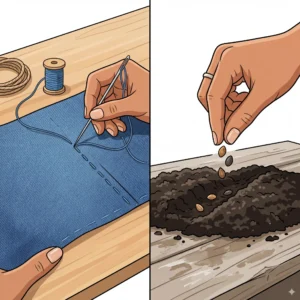
“Sewed = stitched with a needle; Sowed = planted seeds. Both are past tense verbs with different meanings and uses.”
Sewed or sowed? Don’t mix them up — here’s the simple trick to remember! Both are past tense verbs, but they have completely different meanings. Sewed is used when stitching fabric with a needle and thread, for example:
“She sewed a button on her shirt” or “He sewed a patch on his jeans”. On the other hand, sowed is used when planting seeds in soil, like: “He sowed carrots in the garden” or “Farmers sowed wheat across the field”. Confusing them can make your writing unclear, so knowing the difference is essential.
In this article, you’ll find plenty of examples, tips, and tricks to help you master sewed vs sowed effortlessly. Whether you’re writing a story, giving instructions, or just curious about grammar, this guide makes it easy to remember, practical, and fun. Using the right word ensures your English sounds polished and natural.
Sewed or Sowed meanings
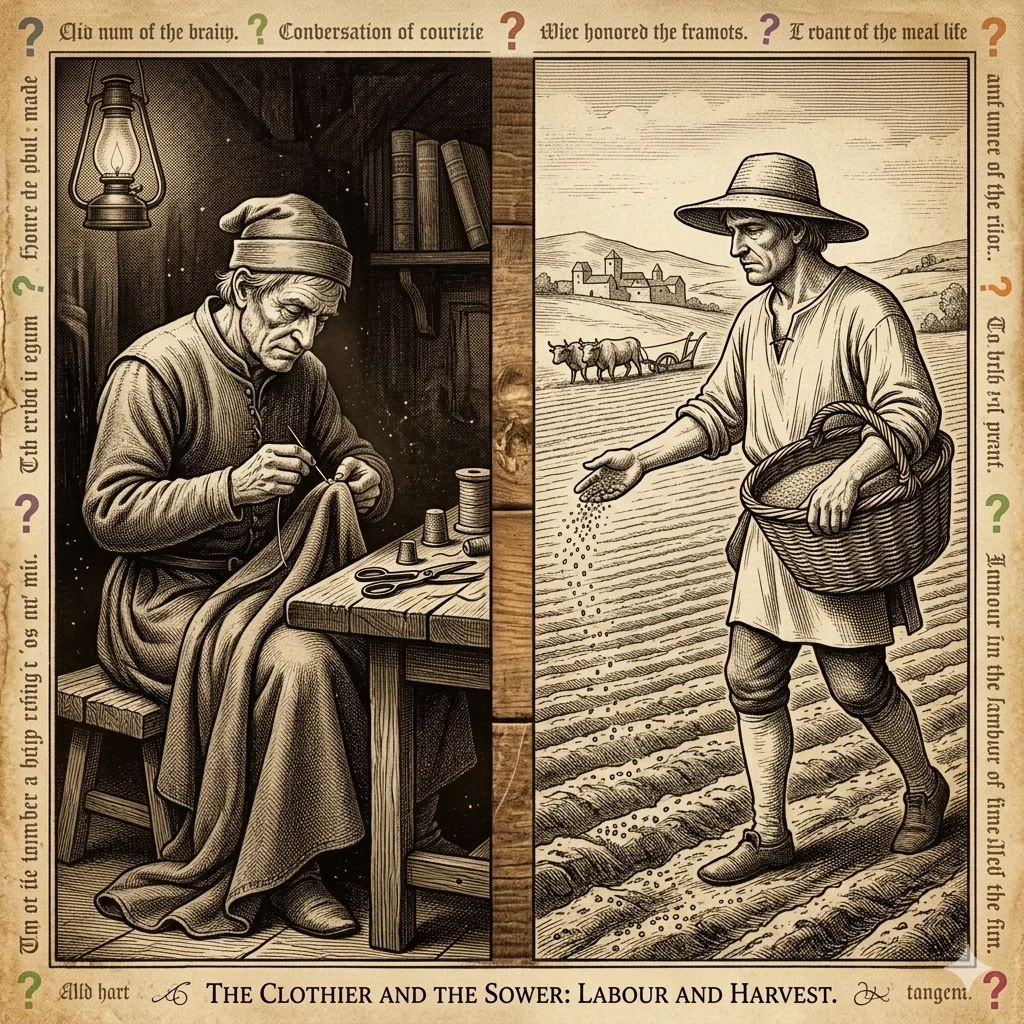
Sewed is the past tense of sew. It means to join fabric using a needle and thread.
Sowed is the past tense of sow. It means to plant seeds in the ground.
If you are talking about clothes, buttons, or fabric, use sewed.
If you are talking about farming, gardening, or planting, use sowed.
Examples:
- She sewed a patch on her jeans.
- He sowed tomato seeds in the garden.
Is it correct to say sewed? Yes. Sewed is the correct simple past tense of sew.
Is there a word called sowed? Yes. Sowed is the correct simple past tense of sow (planting).
Sewed or sowed meaning depends on context. Sewed = stitching. Sowed = planting.
Sewed or sowed pants – You sewed pants. You do not sow pants.
The Origin of Sewed and Sowed
These two words come from very old English. They have different roots.
Sew comes from the Old English word siwian. It meant to stitch or join. This word is over 1,000 years old. People used it for making clothes, repairing nets, and creating leather goods.
Sow comes from the Old English word sawan. It meant to scatter seeds. Farmers used this word for planting crops like wheat and barley.
Why do people confuse them? Because they sound similar. In some dialects, the pronunciation is almost identical. Also, both words have irregular past forms. Sew becomes sewed or sewn. Sow becomes sowed or sown.
The spelling difference is important. One little letter changes the whole meaning. Sewed has an E (like needle). Sowed has an O (like soil). That is a helpful memory trick.
British English vs American English Spelling
Both British and American English use sewed and sowed the same way. But they differ on the past participles.
| Word | American English | British English |
|---|---|---|
| Sew (past) | sewed | sewed |
| Sew (past participle) | sewn (or sewed) | sewn |
| Sow (past) | sowed | sowed |
| Sow (past participle) | sown (or sowed) | sown |
In American English, sewed is accepted as a past participle. For example: “I have sewed three buttons.” In British English, sewn is preferred.
Is it sewn or sown? Sewn relates to stitching. Sown relates to planting.
Is it sown or sowed clothing? It is sewn or sewed clothing. Never sown clothing.
Example sentences:
- American: “I have sewed that tear twice.”
- British: “I have sewn that tear twice.”
- Both: “He sowed the field with corn.”
Sewed pronunciation – Say “sode” (rhymes with “road”).
Sowed pronunciation – Say “sode” (same sound). They are homophones in most English.
Which Spelling Should You Use?
Your choice depends on your audience and your meaning.
If you write for a US audience:
- Use sewed for past tense of stitching.
- Use sewed or sewn as past participle (both are fine).
- Use sowed for past tense of planting.
- Use sown as past participle of planting.
If you write for a UK or Commonwealth audience:
- Use sewed for past tense of stitching.
- Use sewn as past participle.
- Use sowed for past tense of planting.
- Use sown as past participle.
If you write for a global audience:
- Stick to the simplest forms: sewed (stitching past) and sowed (planting past).
- Avoid sewn and sown unless necessary. They confuse non-native speakers.
Sow or sew clothes – You sew clothes. You do not sow clothes.
Sew past tense is sewed. For example: “Yesterday, I sewed a dress.”
Sewed meaning – Joined or repaired with stitches.
Common Mistakes with Sewed and Sowed
Here are the most frequent errors and how to fix them.
Mistake 1: Using “sowed” for clothing
Wrong: “I sowed a button on my shirt.”
Right: “I sewed a button on my shirt.”
Mistake 2: Using “sewed” for planting
Wrong: “She sewed carrot seeds.”
Right: “She sowed carrot seeds.”
Mistake 3: Confusing the participles
Wrong: “I have sowed that quilt.”
Right: “I have sewn that quilt.”
Mistake 4: Using “sown” for stitches
Wrong: “The tailor sown the hem.”
Right: “The tailor sewed the hem.” or “The tailor sewn the hem.”
Mistake 5: Spelling errors in writing
People often type “sowed” when they mean “sewed.” Always check your context. Are you talking about thread or dirt? Fabric or farming?
Sewed or sowed – Ask yourself: needle or seed? That gives the answer.

Sewed or Sowed in Everyday Examples
Let us see how these words appear in real life.
In Emails
- “I sewed the costume last night. It is ready for the party.”
- “We sowed the new grass seed. The lawn should look better in two weeks.”
In News Headlines
- “Local tailor sewed 500 masks for hospital workers.”
- “Farmers sowed winter wheat before the first frost.”
On Social Media
- “Just sewed my first quilt! #sewing”
- “Sowed my garden today. Can not wait for fresh tomatoes.”
In Formal Writing
- “The garment was sewed by hand using traditional methods.”
- “The seeds were sowed in early spring to maximize growth.”
Sown or sewn in a sentence – Here are examples:
- “The torn flag was sewn back together.” (stitching)
- “The fields were sown with barley.” (planting)
Sewed clothes – Example: “She sewed clothes for her three children.”
Sewed or Sowed – Google Trends & Usage Data
Google data shows interesting patterns.
Sewed is searched most in English-speaking countries with strong textile industries. The United States, United Kingdom, India, and Pakistan show high search volumes. Interest peaks around back-to-school season (August–September) and before holidays like Christmas. People search for sewed when they repair clothes or start craft projects.
Sowed is searched more in agricultural regions. The Midwest United States, rural Canada, Australia, and parts of Africa show higher volumes. Searches for sowed peak in spring (March–May) and autumn (September–October). Farmers and gardeners search for this word when planning planting seasons.
Global search volume: Sewed gets about 70% of searches. Sowed gets about 30%. Why? More people sew at home than farm at home. Also, sewing is a common hobby. Farming is a professional activity.
Is it sewed or sowed – In Google searches, sewed appears 2.5 times more often than sowed.
Comparison Table: Sewed vs Sowed vs Sewn vs Sown
| Word | Part of Speech | Meaning | Example Sentence |
|---|---|---|---|
| Sewed | Past tense of sew | Stitched with needle and thread | “He sewed the tear.” |
| Sowed | Past tense of sow | Planted seeds | “She sowed peas.” |
| Sewn | Past participle of sew | Stitched (often with “have” or “be”) | “The flag was sewn.” |
| Sown | Past participle of sow | Planted (often with “have” or “be”) | “The seeds are sown.” |
Quick reference:
- Needle = sewed or sewn
- Seed = sowed or sown
FAQs
1. Is it correct to say sewed?
Yes. Sewed is the correct simple past tense of the verb sew. Example: “I sewed a pillow yesterday.”
2. Is it sewn or sown?
Sewn refers to stitching. Sown refers to planting. They are not interchangeable.
3. Is there a word called sowed?
Yes. Sowed is the correct simple past tense of the verb sow (to plant seeds).
4. Is it sown or sowed clothing?
Neither. Clothing is sewn or sewed. You do not sow clothing.
5. Sewed or sowed meaning – what is the difference?
Sewed means joined with stitches. Sowed means planted seeds. The difference is action: needle vs seed.
6. Sow or sew clothes?
You sew clothes. Sow is only for planting.
7. Sew past tense – is it always sewed?
Yes, for simple past tense. Example: “Last week, she sewed a curtain.” For past participle, you can use sewed or sewn.
8. Sewed pronunciation – how do I say it?
Say “sode” – it rhymes with “road” and “toad.”
9. Can I use sewed as a past participle?
Yes, especially in American English. “I have sewed three dresses” is correct.
10. What is the memory trick to never confuse them?
Think: Sewed has an E for nEEdle. Sowed has an O for sOil.
Conclusion
Let us review what you learned.
Sewed and sowed sound the same but mean different things. Sewed is for stitching with a needle and thread. Sowed is for planting seeds in soil.
If you fix clothes, buttons, or fabric, use sewed. If you plant a garden, farm crops, or scatter seeds, use sowed.
The past participles add another layer. Sewn and sown appear in formal writing. But for most daily use, sewed and sowed work perfectly.
Remember the simple test: needle or seed? That question gives your answer every time.
Now you can write with confidence. No more guessing. No more embarrassing mistakes. Use sewed for your sewing projects. Use sowed for your gardening plans.
And if someone asks you “is it sewed or sowed?” – you can explain it clearly.

Eli Metaphor blends creativity with wit, crafting articles that make language feel alive. Known for his clever comparisons and modern writing style, Eli helps readers understand how figurative language shapes emotion and meaning. He’s the analytical heart of SimileMind — where logic meets lyricism.