
Many people search for youth / youths because the words look simple but cause real confusion in daily English. Learners, writers, students, and even professionals often ask: Do we say youth or youths? Is youths correct? Is it 10 youth or 10 youths?
The problem is that youth can act as both a singular noun and a collective noun, while youths is a clear plural form. This creates grammar mistakes in exams, articles, emails, and social media posts.
This confusion grows because British and American English treat usage slightly differently, and informal speech often ignores grammar rules. People also struggle with phrases like many youth or many youths, and how to use these words in sentences correctly.
This article solves all that confusion. You’ll get a quick answer, full grammar explanation, real-life examples, usage tables, and professional advice on when to use youth and youths correctly. By the end, you’ll confidently know the difference, avoid common mistakes, and choose the right word for every situation.
Youth / Youths
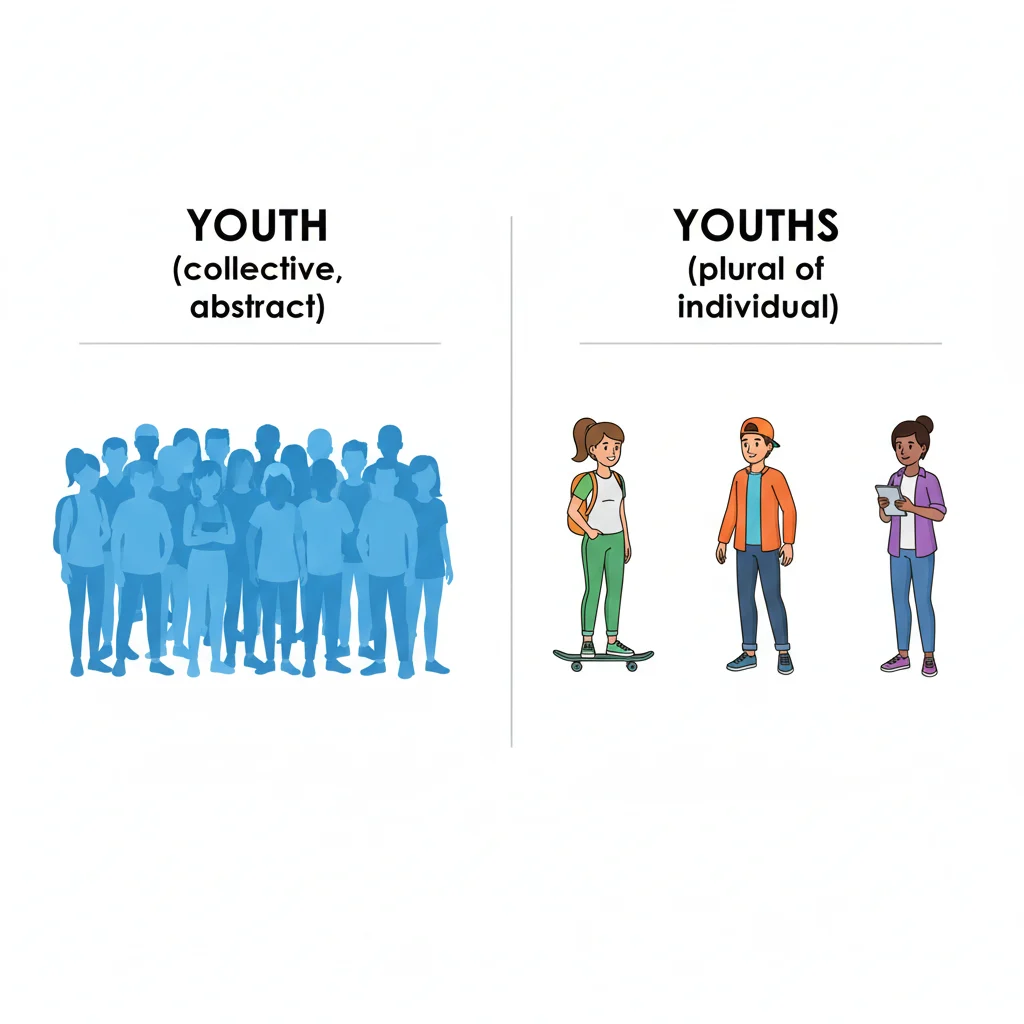
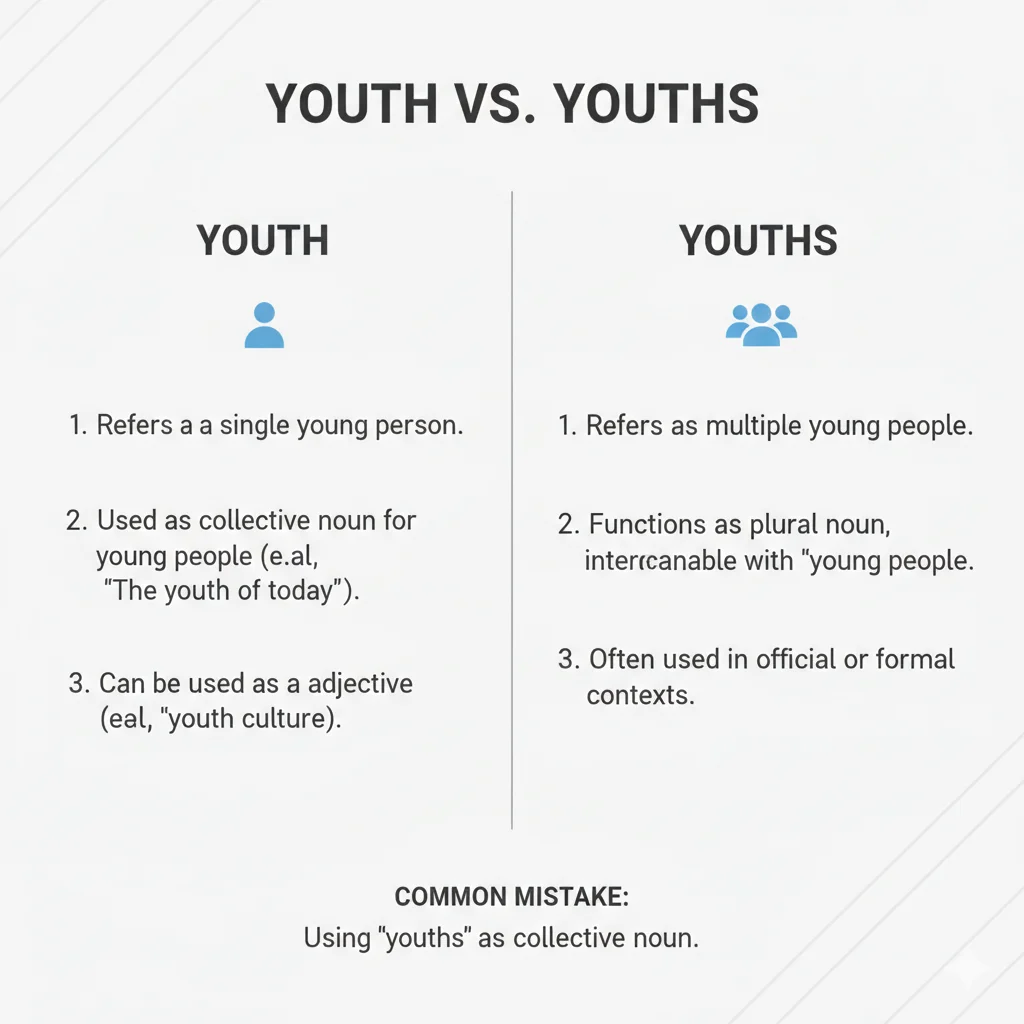
Youth refers to young people as a group or the state of being young.
Youths is the plural form and refers to individual young people.
Examples:
- The youth of the country need education.
- Three youths were arrested last night.
👉 Is youths correct? Yes, when you mean more than one young person.
The Origin of Youth / Youths
The word youth comes from Old English geoguth, meaning “young people” or “young age.” Over time, it became both a mass noun (like furniture) and a countable noun (one youth, two youths).
Spelling differences do not exist here, but usage differences do. English allows youth to represent a group, while youths clearly counts individuals. This dual role is why learners struggle with youth youths grammar and youth youths plural rules.
British English vs American English Spelling
There is no spelling difference between British and American English. However, usage frequency differs.
| Aspect | British English | American English |
|---|---|---|
| Youth (collective) | Very common | Very common |
| Youths (plural people) | Common | Common |
| Formal writing | Prefers “youth” | Uses both |
Both forms are correct in both variants.
Which Spelling Should You Use?
- US audience: Use youth for groups, youths for individuals.
- UK/Commonwealth: Same rule, but formal writing prefers youth.
- Global audience: Use youth unless counting people clearly.
👉 If numbers are involved, use youths.
Common Mistakes with Youth / Youths
❌ Many youth are unemployed.
✅ Many youths are unemployed.
❌ Ten youth joined the program.
✅ Ten youths joined the program.
❌ Youth are protesting today.
✅ The youth are protesting today.
These errors happen because people forget that many and numbers require youths.
Youth / Youths in Everyday Examples
Emails:
- Our organization supports local youth programs.
News:
- Two youths were injured in the accident.
Social Media:
- Today’s youth want change.
Formal Writing:
- Youth development is a national priority.
These examples show youth youths in a sentence used correctly.

Youth / Youths – Google Trends & Usage Data
Search trends show high interest in:
- Do we say youth or youths?
- Many youth or many youths
- Is youths correct
Globally, youth is searched more because it is broader. Youths spikes in legal, news, and academic contexts where counting matters.
Youth vs Youths – Comparison Table
| Term | Meaning | Correct Usage |
|---|---|---|
| Youth | Young people as a group | Collective |
| Youths | Individual young people | Plural |
| Youth (state) | Being young | Abstract |
FAQs About Youth / Youths
1. Do we say youth or youths?
Both are correct. Use youth for groups, youths for individuals.
2. What is the difference between youths and youth?
Youth is collective or abstract. Youths counts people.
3. Is it 10 youth or 10 youths?
Correct: 10 youths.
4. When to use youth?
Use youth when talking about society, age, or a group.
5. Is youths correct?
Yes, it is the plural noun form.
6. Many youth or many youths?
Correct: many youths.
7. What are youth youths synonyms?
Young people, adolescents, teens (context-based).
Conclusion
Understanding the difference between youth and youths is essential for clear and correct English. While youth works as a collective noun or describes the state of being young, youths is the proper plural form when referring to individual people. This distinction explains why phrases like many youths, ten youths, and two youths are grammatically correct, while many youth is not.
There is no spelling difference between British and American English, but formal writing often prefers youth unless counting is required. By remembering one simple rule—numbers and “many” need youths—you can avoid most mistakes.
Whether you are writing emails, news articles, academic content, or social media posts, using youth and youths correctly improves clarity and professionalism. Mastering this small grammar point can make a big difference in how confident and credible your English sounds.

Eli Metaphor blends creativity with wit, crafting articles that make language feel alive. Known for his clever comparisons and modern writing style, Eli helps readers understand how figurative language shapes emotion and meaning. He’s the analytical heart of SimileMind — where logic meets lyricism.