Have you ever paused mid-sentence, your finger hovering over the keyboard, unsure whether to write “bended” or “bent”? You’re not alone. This seemingly simple verb trips up writers, students, and professionals daily, creating a small but persistent point of grammar confusion.
People search for “bended / bent” not out of idle curiosity, but from a genuine need for clarity in their communication. Should a historical novel use “he bended his knee” for authenticity, or is it just wrong? Is “bent” always the rule, or does “bended” have a place in modern English? This confusion stems from the fascinating evolution of the English language, where older, irregular verb forms sometimes linger in shadows and specific phrases.
This article cuts through the uncertainty. We’ll explore the definitive answer, trace the word’s history, compare British and American usage, and provide clear, actionable advice. By the end, you’ll know exactly when to use “bent” and the rare, special cases where “bended” is acceptable, empowering you to write with confidence and precision.
Bended / Bent
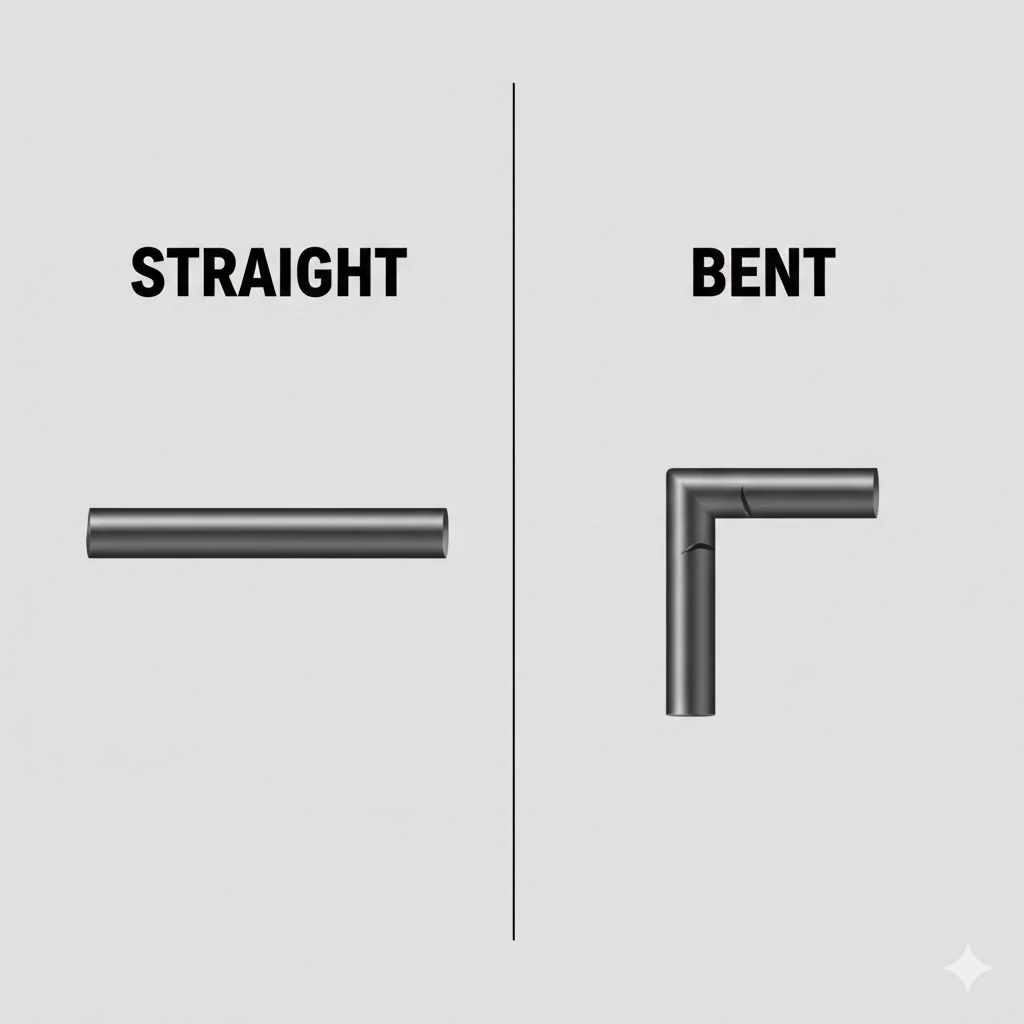
Bent is the standard, universally accepted past tense and past participle of the verb “to bend.” You should use it in almost all situations. Bended is an archaic form that is almost never correct in modern English, surviving only in the fixed, idiomatic phrase “on bended knee.”
Examples:
- Correct: He bent the wire into a shape. The metal had bent from the heat.
- Archatic/Poetic: The old tree bended in the storm. (This sounds old-fashioned).
- Idiomatic: He proposed on bended knee.
The Origin of Bended / Bent
The confusion between “bended” and “bent” is a window into the history of English verbs. “Bend” comes from the Old English verb bendan, meaning “to bind or fasten with a string,” later evolving to mean “to curve or make crooked.” Like many Old English verbs, its past tense was originally formed by changing the vowel sound (a process called ablaut), leading to forms like “bent.”
However, as English evolved after the Norman Conquest, the “-ed” ending for regular past tenses became dominant. This led to a period of fluctuation. For centuries, both “bented” and “bent” were in use. Over time, “bent” won out as the standard irregular form for most uses. “Bended” didn’t disappear completely; it retreated into poetic, literary, or deliberate archaic usage and became fossilized in a few set phrases. This is why “bended” feels old-fashioned—it is an older form that has been largely replaced, leaving “on bended knee” as its last common refuge. The spelling difference exists because language is not a static rulebook but a living record of historical change and competition between forms.
British English vs American English Spelling
For the core word “bent,” there is no difference between British and American English spelling. Both dialects unequivocally accept “bent” as the correct past tense and participle of “bend.” The potential for confusion with “bended” is identical in both varieties.
The distinction arises in the broader context of how the two dialects sometimes treat verb endings and archaic forms. American English often favors streamlined, modernized spellings and is quicker to discard archaic variants. British English, while also using “bent” as standard, may have a slightly higher tolerance for encountering “bended” in historical or literary contexts, but it is still marked as non-standard or poetic.
Examples:
- Both Correct: The pipe bent at a 90-degree angle. (US & UK)
- Both Archaic: The willow bended gracefully over the pond. (Seems old-fashioned in both)
- Both Idiomatic: She made her plea on bended knee. (Standard phrase in both)
| Feature | American English | British English |
|---|---|---|
| Standard Past Tense | Bent | Bent |
| Standard Past Participle | Bent | Bent |
| Arch/Non-Standard Form | Bended | Bended |
| Acceptance of “on bended knee” | Yes, as a fixed idiom | Yes, as a fixed idiom |
| Likelihood in Historical Text | Low | Slightly higher, but still low |
Which Spelling Should You Use?
Your choice depends entirely on your audience and purpose.
- For a US Audience: Use “bent” exclusively. “Bended” will almost always be seen as a mistake unless it is clearly part of the phrase “on bended knee.”
- For a UK/Commonwealth Audience: Use “bent.” While readers may recognize “bended” from classic literature, they still expect the modern standard “bent” in contemporary writing.
- For a Global/International Audience (Business, Web, Academia): Use “bent.” It is the safe, correct, and professional choice that will be understood by everyone.
- For Creative or Historical Writing: “Bent” is still your default. You may cautiously use “bended” to achieve a specific archaic, poetic, or rustic tone, but be aware most readers will simply think it’s an error. The one universally safe creative use is “on bended knee.”
Rule of Thumb: When in doubt, use “bent.” You will never be wrong.
Misclick or Missclick? Your Definitive Guide to Getting It Right
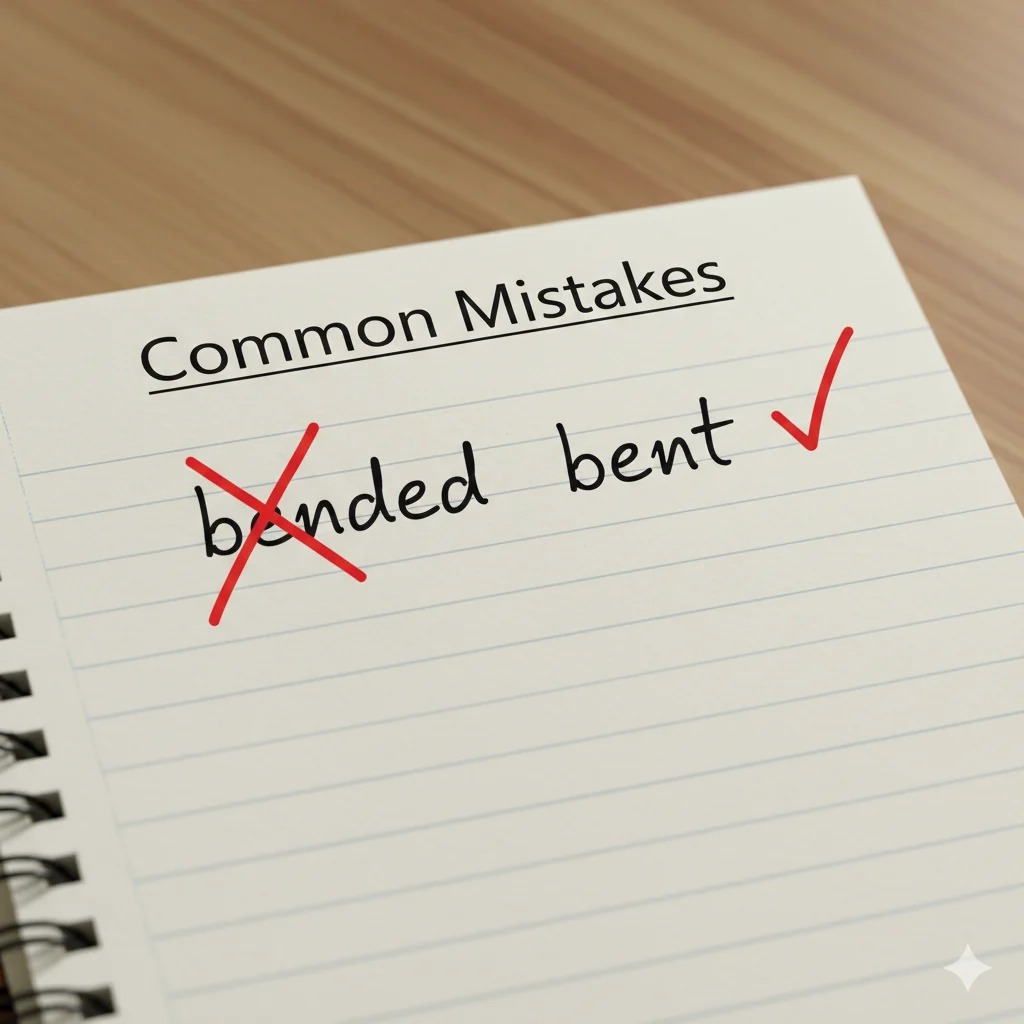
Common Mistakes with Bended / Bent
- Using “bended” as the general past tense.
- Mistake: He bended the rules for his friend.
- Correction: He bent the rules for his friend.
- Misspelling the idiom “on bended knee.”
- Mistake: He proposed on bent knee.
- Correction: He proposed on bended knee. (This is the exception to the rule).
- Incorrect past participle with “have/had.”
- Mistake: The steel has bended under pressure.
- Correction: The steel has bent under pressure.
- Over-correcting and avoiding the correct idiom.
- Mistake: She asked on bent knee. (While understood, it breaks the established idiom).
- Correction: She asked on bended knee.
Bended / Bent in Everyday Examples
- Email (Professional): “The delivery timeline has bent slightly due to supply chain issues, but we are on track.”
- News Headline: “Local Community Bent on Saving Historic Bridge from Demolition.”
- Social Media (Casual): “I completely bent the lid trying to open this jar. Send help. 🥫”
- Formal Report: “The composite material was tested until it bent at a 45-degree angle, confirming its tensile limit.”
- Literature/Idiom: “The knight approached the queen on bended knee, offering his
- sword.”

Bended / Bent – Google Trends & Usage Data
Analysis of search and usage data clearly shows the dominance of “bent.” Searches for “bent meaning” or “is bent past tense” outnumber those for “bended” by a vast margin. The searches for “bended” are almost exclusively tied to the phrase “on bended knee” or the question “Is bended a word?”, indicating it is a point of confusion, not common usage.
Geographically, this pattern is consistent across English-speaking countries like the United States, the United Kingdom, Canada, and Australia. The data confirms that “bent” is the living, active word in the language, while “bended” survives primarily as a linguistic fossil preserved in a single, specific context.
Comparison Table
| Keyword Variation | Grammatical Role | Correctness | Example Usage |
|---|---|---|---|
| Bent | Past Tense / Past Participle | Correct (Standard) | She bent down to pick it up. It has bent. |
| Bended | Archaic Past Tense / Participle | Incorrect (Archaic) | The reeds bended in the wind. (Poetic/Old) |
| On bended knee | Fixed Idiomatic Phrase | Correct (Idiom) | They begged on bended knee. |
| Bend | Base Form (Present) | Correct | I bend the truth sometimes. |
| Bending | Present Participle | Correct | He is bending the metal. |
FAQs
Which is correct, bent or bended?
Bent is correct for almost all uses as the past tense of “bend.” Bended is an archaic form only correct in the fixed phrase “on bended knee.”
Is it correct to say bended?
It is generally incorrect in modern English. The only time it is considered correct is in the historical/formal idiom “on bended knee.”
What is a bended?
“Bended” is not a noun. It is an archaic adjective-form from the verb “bend,” surviving only in “on bended knee,” where it describes the position of the knee.
What is the past tense of bend?
The past tense (and past participle) of “bend” is bent. (Example: Yesterday, I bent the spoon).
What does “bended” mean?
It is the old-fashioned form of “bent,” meaning curved or angled. Its meaning is the same, but its usage is now extremely limited.
What is a synonym for “bent”?
Synonyms include: curved, twisted, flexed, bowed, angled, folded, and contorted.
What is the past tense and past participle of bend?
Both the simple past tense and the past participle are bent.
- Past Tense: He bent it.
- Past Participle (with have/had): It has bent.
Can you use “bended” in a sentence?
Yes, but only in specific contexts:
- As an idiom: “He asked for forgiveness on bended knee.”
- For deliberate archaic effect: “The ancient oak bended but did not break.” (Most readers will see this as a mistake).
Is “bended” a word?
Yes, “bended” is a word, but it is classified as an archaism. This means it exists in the language’s history and can be found in old texts, but it is no longer part of standard contemporary vocabulary.
Conclusion
Navigating the “bended vs. bent” dilemma is simpler than it first appears. The key takeaway is overwhelming: “Bent” is the correct, modern choice for 99% of your writing. It is the standard past tense and past participle of “to bend,” accepted without question in all forms of English worldwide. “Bended” is a linguistic relic, a shadow of the language’s past that serves as a reminder of its evolution. Its only foothold in present-day English is the romantic and formal idiom “on bended knee.”
For clear, professional, and error-free communication, make “bent” your automatic choice. Reserve “bended” solely for that one specific phrase, and you will master this subtle point of grammar with confidence. Language bends and changes over time, and in this case, it has firmly settled on “bent.”

Ava Quillstone is a passionate wordsmith who turns everyday language into art. With a deep love for creative writing and poetic expression, Ava explores the magic of metaphors, similes, and the hidden emotions behind words. When she’s not writing for SimileMind, she’s sipping tea by a window and dreaming up new literary worlds.