“Awakened and awoken are past forms of ‘awaken’; awakened is common in modern English, while awoken is mostly used in formal or literary contexts.”
Ever wondered whether to write “I have awakened” or “I have awoken”? Many writers and English learners get this confused. Both words come from the verb awaken, which means to wake up or become aware.
The difference is mainly in usage and style. Awakened is the more common form in everyday English and modern writing, especially in American English. Awoken, on the other hand, is typically used as a past participle in formal or literary contexts.
Here are a few examples to make it clear:
- “The loud noise awakened the baby.”
- “He had awoken suddenly from a deep sleep.”
- “She awakened to the sound of birds outside.”
- “They had awoken before dawn to start their journey.”
By understanding the difference between awakened or awoken, you can confidently choose the right form and write clearly, naturally, and grammatically correct. This article will guide you through usage tips, examples, and tricks to never mix them up again.
Awakened or Awoken meanings
If you need the answer right now, here it is. Both awakened or awoken are correct past tense forms of the verbs “to awake” or “to awaken,” but they are used slightly differently.
- Awoken is the past participle of awake. You usually use it with a helping verb like “have” or “was.”
- Example: “She has awoken early every day this week.”
- Example: “I was awoken by the loud thunder.”
- Awakened is the simple past and past participle of awaken. It is a regular verb form.
- Example: “He awakened from his nap feeling refreshed.” (Simple Past)
- Example: “They were awakened by the smell of coffee.” (Past Participle)
So, when asking “Do you say awakened or awoken? ” the answer is: it depends on the verb you are using. If you start with “awake,” use “awoken.” If you start with “awaken,” use “awakened.”
The Origin of Awakened or Awoken
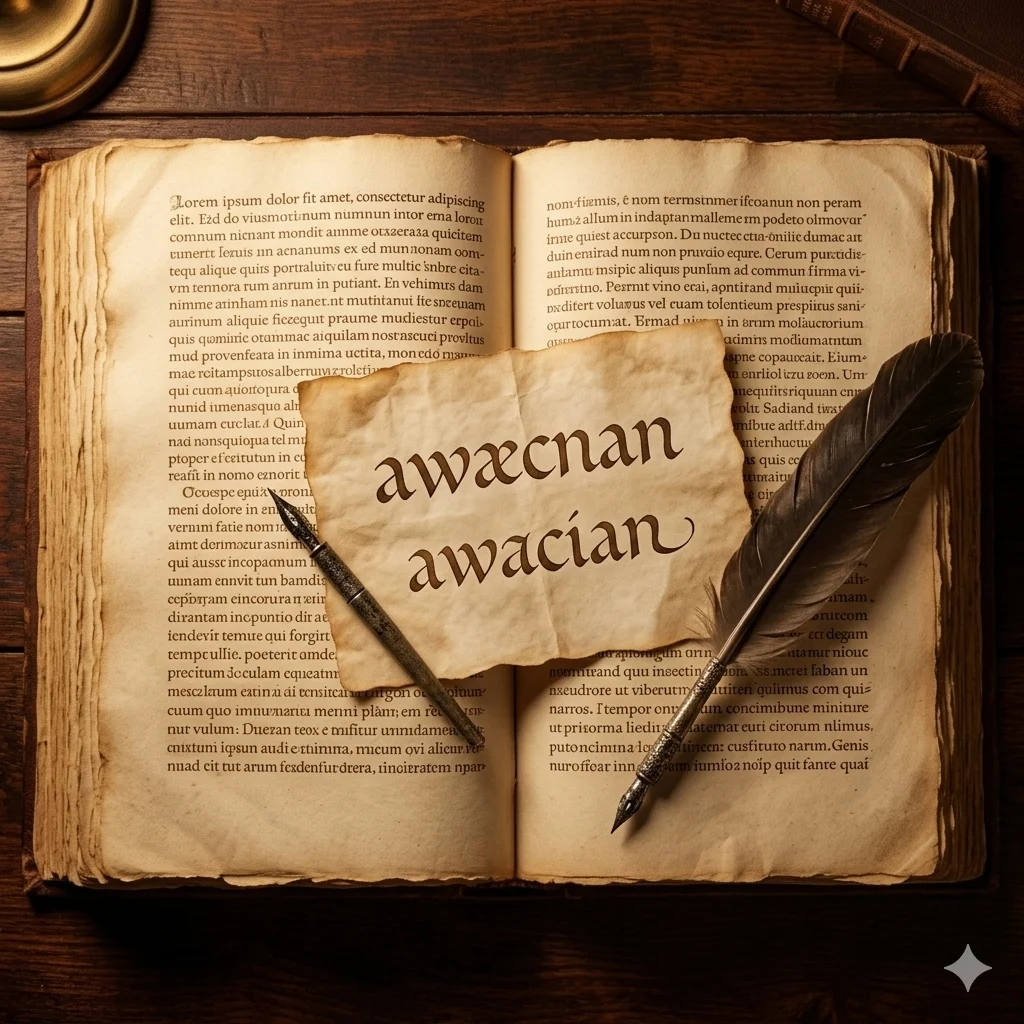
To understand why we have two words like awakened or awoken, we have to look back at the history of the English language. The confusion dates back over a thousand years to Old English. Back then, there were two different verbs for waking up. One was a “strong” verb, which changed its vowel sound to show past tense. The other was a “weak” verb, which simply added an “-ed” or “-d” to show past tense.
Over centuries, these two verbs blended together. The strong verb gave us “awake,” “awoke,” and “awoken.” The weak verb gave us “awaken,” “awakened,” and “awakened.” Because they meant almost the same thing, people started using them interchangeably.
This is why we now have two sets of words that seem to do the same job. The spelling differences exist simply because they come from two different word families that merged into modern English. This historical mix-up is the root of why people still ask, “Is there a word awoken? ” Yes, there is, and it comes from this ancient strong verb tradition.
British English vs American English Spelling
When it comes to awakened or awoken, both American and British English accept both words. However, there is a slight preference in how they are used in everyday writing.
- In American English: Writers tend to be more flexible. You will often see “awakened” used in both literal and figurative senses. “Awoken” is common but is sometimes seen as slightly more literary or formal.
- Example (US): “The sound of the alarm awakened everyone in the house.”
- Example (US): “She had awoken to find the world covered in snow.”
- In British English: There is a stronger historical preference for “awoken” as the past participle of “awake.” “Awakened” is still very common and correct, especially when used as a transitive verb meaning “to rouse from sleep.”
- Example (UK): “He was awoken by the postman’s knock.”
- Example (UK): “My interest in history was awakened by that book.”
Here is a simple comparison table to show the subtle differences:
| Verb Form | American English Preference | British English Preference | Example Sentence |
|---|---|---|---|
| Simple Past | Awakened / Awoke | Awakened / Awoke | “I awakened early.” or “I awoke early.” |
| Past Participle | Awakened / Awoken | Awoken / Awakened | “I have awoken.” or “I have awakened.” |
| Adjective Use | Awakened | Awakened | “an awakened interest in art” |

Which Spelling Should You Use?
The choice between awakened or awoken often comes down to your audience and the tone of your writing. Here is simple advice to help you decide.
- For a US Audience: You can use both freely. “Awakened” is a very safe and common choice for any type of writing, from business emails to novels. “Awoken” is perfect for storytelling or descriptive writing.
- For a UK or Commonwealth Audience: Both are accepted, but using “awoken” as the past participle often sounds more natural. For example, “The baby has awoken” is a phrase you might hear more often in the UK than “The baby has awakened.”
- For a Global Audience (like the internet): The safest approach is to use “awakened” for almost everything. Because it follows the regular “-ed” pattern, it is instantly understandable to everyone, including non-native English speakers. It is the most versatile choice.
- For Formal Writing: In academic papers or business reports, “awakened” is often preferred because it sounds more formal and standard. For example, “The committee was awakened to the risks involved” sounds more professional than “The committee was awoken to the risks.”
Ultimately, the best choice is the one that feels right for your sentence. When in doubt, check if you are using the verb “to awaken.” If you are, “awakened” is your word.
Common Mistakes with Awakened or Awoken
Because these words are so similar, people make mistakes with them all the time. Here are the most frequent errors and how to fix them.
- Mistake 1: Using the wrong helping verb.
- Incorrect: “I have awakened by the sun.”
- Correct: “I was awakened by the sun.” (Passive voice) or “I have awoken.” (Active, with no agent).
- Mistake 2: Confusing “awoken” with “awoken.”
- Note: There is no spelling mistake here, but some people think “awoken” isn’t a word. Is there a word awoken? Yes, absolutely. It is a standard past participle.
- Mistake 3: Using the past form when you need a past participle.
- Incorrect: “He has awoke early.” (Using simple past ‘awoke’ with ‘has’)
- Correct: “He has awoken early.” or “He awoke early.”
- Mistake 4: Forgetting the context of “being awakened.”
- People often wonder, “I was awakened meaning?” It simply means someone or something caused you to wake up. For example, “I was awakened by a loud noise.” It implies an external force. “I awoke” implies you woke up naturally.
- Mistake 5: Mixing up the verbs entirely.
- Confusion: “Is it awakened or awoken in this sentence: ‘The alarm clock has ____ me up’?”
- Answer: Both can work, but the most natural would be “The alarm clock has awoken me up” or “The alarm clock awakened me.”
Eighth or Eigth: The Tiny Detail You’re Always Getting Wrong 😱
Awakened or Awoken in Everyday Examples
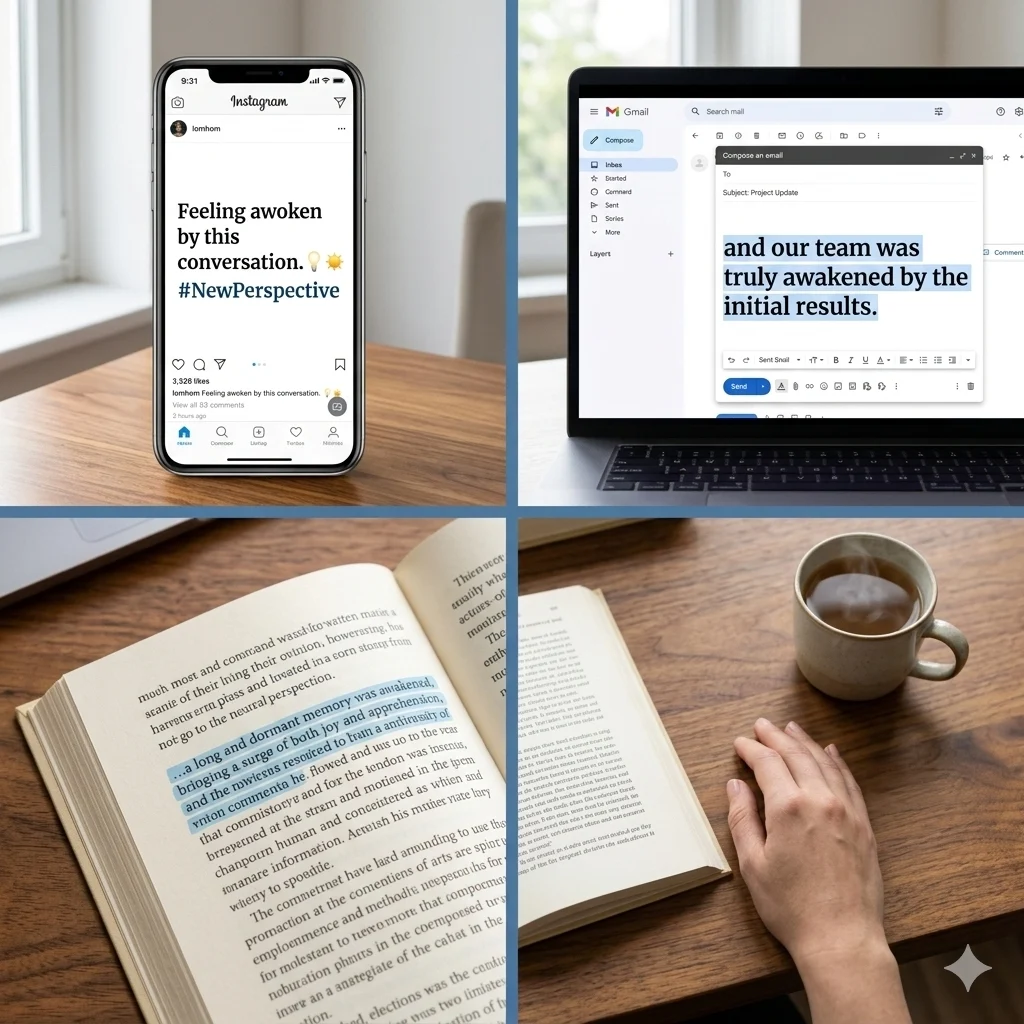
Seeing how these words are used in real life makes the choice much easier. Here are examples from different types of writing.
In a Formal Email:
“Dear Team, I was awakened last night to the news of the server outage. We need to discuss preventative measures today.”
In a News Article:
“The residents were awoken by the sound of emergency sirens at dawn. Fire crews awakened those in the immediate vicinity and moved them to safety.”
On Social Media (Twitter/Instagram):
“Just awoken from the best nap ever. 😴 #SundayVibes”
“Awakened my inner child today by buying ice cream for breakfast.”
In a Novel:
“He had not been awoken; rather, he had drifted slowly back to consciousness, awakened not by a sound, but by the feeling of sunlight on his face.”
In a Figurative Sense:
“The documentary awakened a desire in me to travel the world. I had never been so deeply awoken to the beauty of other cultures.”
As you can see from these awakened or awoken examples, the choice often depends on the rhythm of the sentence. “Awakened” often sounds slightly more formal or forceful, while “awoken” can sound softer or more literary. When someone says “You have awoken a giant,” it sounds powerful. When someone says “He has awakened or has awoken?” the question is really about the verb you started with.
Awakened or Awoken – Google Trends & Usage Data
Looking at how people search for awakened or awoken online tells an interesting story about language evolution.
- Global Popularity: In global Google searches, “awakened” is consistently more popular than “awoken.” This is likely because “awakened” follows a standard pattern (verb + -ed), making it the default choice for people who are unsure. When someone types “is it awakened or awoken” into Google, they are often looking for the most standard form.
- Regional Data: In the United States, the search volume for both terms is high, but “awakened” edges out “awoken.” In the United Kingdom, the gap is narrower, with “awoken” being a much more common search term relative to its population, supporting the idea that it is more prevalent in British English.
- Contextual Data: In literary and philosophical contexts, “awoken” sees a spike. For example, searches for “being awakened or awoken” in a spiritual sense often lean towards “awoken.” People ask, “What does being awoken mean? ” when they are looking for a deeper, more metaphorical meaning, like being awoken to a new idea.
- Related Queries: The data shows that people searching for this topic are often looking for awakened or awoken synonym. Common synonyms that appear in searches include “roused,” “stirred,” “aroused,” and “woke up.” This shows that user intent is not just about spelling, but also about finding the right word for the right feeling.
The data confirms that while both words are used, “awakened” is the safe, standard choice for most global audiences, while “awoken” has a strong foothold in the UK and in literary contexts.
Comparison Table: Awakened vs. Awoken
This table puts the two words side-by-side to make the differences crystal clear.
| Feature | Awakened | Awoken |
|---|---|---|
| Part of Speech | Verb (past tense & past participle of “awaken”) | Verb (past participle of “awake”) |
| Usage Pattern | Used with or without helping verbs (has/have/had/was/were). | Almost always used with helping verbs (has/have/had/was/were). |
| Sentence Role | Can be the main action verb (“He awakened.”) or a helper verb form (“He was awakened.”). | Always the main verb after a helper (“He has awoken.”). |
| Sound/Feel | Regular, standard, formal, slightly more forceful. | Irregular, literary, slightly softer, common in the UK. |
| Common Phrases | “I was awakened by…” / “an awakened interest” | “I have awoken to…” / “he was awoken” |
| Key Question | Use this if you start with the verb “to awaken.” | Use this if you start with the verb “to awake.” |
FAQs
1. Do you say awakened or awoken?
You can say both, but they are used in different grammatical structures. Use “awakened” as the past tense of “awaken” (e.g., “I awakened early”). Use “awoken” as the past participle of “awake,” usually with a helping verb like “have” or “was” (e.g., “I have awoken”).
2. Is there a word awoken?
Yes, “awoken” is a standard English word. It is the past participle of the verb “to awake.” It has been used for centuries and is found in dictionaries and literature around the world.
3. What does being awoken mean?
“Being awoken” means that someone or something caused you to stop sleeping. It is the passive form of the verb “to awake.” For example, “I disliked being awoken so early.” It can also be used figuratively, meaning to become aware of something, as in “being awoken to the truth.”
4. How to use the word awoken?
Use “awoken” immediately after a helping verb. These helping verbs include: has, have, had, was, were, be. For example: “The spell had awoken the ancient beast.” or “They were awoken by the storm.” You would not say “I awoken early”; you would say “I awoke early” or “I have awoken early.”
5. What is the difference between “I was awakened” and “I was awoken”?
The meaning is the same: both indicate that you were roused from sleep. The difference is grammatical. “I was awakened” comes from the verb “awaken.” “I was awoken” comes from the verb “awake.” In modern usage, they are interchangeable in this passive form, though “awakened” can sometimes sound slightly more formal.
6. Is it “he has awakened” or “has awoken”?
Both are grammatically correct. “He has awakened” uses the verb “awaken.” “He has awoken” uses the verb “awake.” There is no difference in meaning. You can choose the one that sounds best to you or fits the rhythm of your sentence.
7. What is a synonym for awakened or awoken?
If you are looking for an awakened or awoken synonym, you can use words like: roused, stirred, aroused, woken up, or brought to consciousness. For a figurative meaning, synonyms include: ignited, sparked, or stimulated.
8. Can you use “awoken” in a sentence without a helping verb?
No, this is a common mistake. “Awoken” is a past participle and needs a helper. For example, it is incorrect to say “I awoken early.” The correct simple past form is “I awoke.” “Awoken” is only correct with a helper, like in the sentence: “I have awoken.”
Conclusion
By now, the confusion surrounding awakened or awoken should be cleared up. The key takeaway is that both words are correct, but they serve different masters. “Awakened” is the loyal servant of the verb “to awaken,” following the regular, predictable path of adding “-ed.” “Awoken” is the historical child of the verb “to awake,” an irregular verb that requires a helping verb like “have” or “was” to stand beside it.
When you write, you no longer need to freeze in uncertainty. Ask yourself a simple question: Which verb am I using? If it’s “awaken,” choose “awakened.” If it’s “awake,” choose “awoken” for the past participle and “awoke” for the simple past. For the widest audience and the safest bet in formal writing, “awakened” is your go-to word. For literary flair or when writing for a British audience, “awoken” fits perfectly. Language is a tool for clear communication, and now you have the knowledge to use these two powerful words with absolute confidence, ensuring your writing is always precise and polished.

Ava Quillstone is a passionate wordsmith who turns everyday language into art. With a deep love for creative writing and poetic expression, Ava explores the magic of metaphors, similes, and the hidden emotions behind words. When she’s not writing for SimileMind, she’s sipping tea by a window and dreaming up new literary worlds.